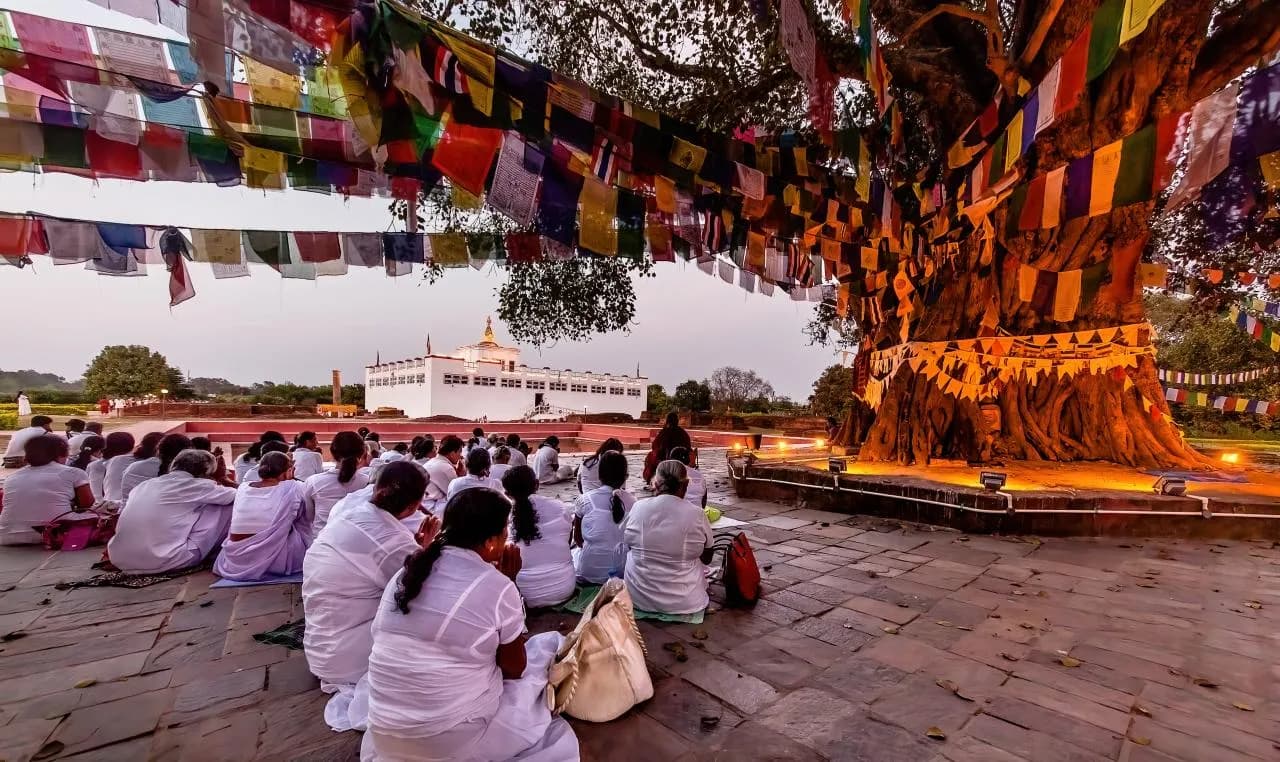
Lumbini
The birthplace of Lord Buddha — a UNESCO World Heritage Site in the Terai plains of Nepal, where Prince Siddhartha Gautama was born in the 6th century BCE.


About Lumbini
Lumbini is the birthplace of Siddhartha Gautama — the historical Buddha — and one of the most important religious sites on Earth. Located in the Rupandehi District of Nepal's Terai plains, this UNESCO World Heritage Site (designated in 1997, Site ID 666) draws hundreds of thousands of pilgrims and visitors from around the world each year.
The site's authenticity was confirmed in 249 BCE when Emperor Ashoka of the Maurya dynasty made a pilgrimage here and erected a sandstone pillar with a Brahmi inscription declaring: "Here the Buddha, the Sage of the Shakyas, was born." This Ashoka Pillar still stands today — a 2,275-year-old testament to the birthplace's significance.
At the heart of Lumbini lies the Sacred Garden, a 2.56 square kilometer area designed by legendary Japanese architect Kenzo Tange in 1978. His master plan divides the site into three zones along a precise north-south axis: the Sacred Garden (containing Maya Devi Temple, the Ashoka Pillar, and the Puskarini Pond), the Monastic Zone (with 32+ international monasteries divided into East/Theravada and West/Mahayana-Vajrayana sections), and New Lumbini Village (the secular area for visitors). A long canal separates the sacred from the secular, symbolizing the journey from the mundane to the enlightened.
The Maya Devi Temple, the most sacred structure, houses the exact spot where Queen Maya Devi gave birth to Prince Siddhartha. Inside, a marker stone encased in bulletproof glass marks the precise birthplace, while ruins of ancient brick temples and a 14th-century nativity sculpture surround it. Below the temple, a 2013 archaeological excavation by Durham University uncovered a 6th-century BCE timber shrine — the earliest archaeological evidence of Buddhist worship, pushing the site's confirmed sacred history 350 years earlier than Ashoka's era.
The Puskarini Sacred Pond, where Maya Devi is said to have bathed before giving birth and where the newborn Siddhartha had his first bath, sits adjacent to the temple. Pilgrims still reflect and offer prayers at its stepped edges.
Beyond the Sacred Garden, the Monastic Zone features over 32 monasteries from 15+ countries, each built in its own national architectural tradition. The Royal Thai Monastery gleams in white marble, Myanmar's Golden Temple replicates the Shwedagon Pagoda, the German Great Lotus Stupa features a painted interior, and the Korean Dae Sung Shakya monastery stands as the tallest structure in the complex. The Eternal Peace Flame, burning continuously since November 1, 1986, and the World Peace Pagoda built by Japanese Nipponzan Myohoji monks complete the landscape.
Lumbini holds universal significance for the world's 500+ million Buddhists as the first of the four most sacred Buddhist sites (alongside Bodh Gaya, Sarnath, and Kushinagar). It is also an interfaith pilgrimage site — many Hindus revere Buddha as the 9th avatar of Lord Vishnu, and the site sits in Nepal's Hindu-majority Terai region, where Hindu and Buddhist traditions have coexisted for millennia.
Why Visit Lumbini
 Stand at the exact birthplace of Lord Buddha, marked by the ancient marker stone
- See the 2,275-year-old Ashoka Pillar with its Brahmi inscription confirming Buddha's birth here
- UNESCO World Heritage Site since 1997 — one of the most important religious sites on Earth
- Explore 32+ international monasteries representing Buddhist traditions from 15+ countries
- Meditate where the world's most influential spiritual teacher took his first breath
- Visit the Sacred Garden designed by legendary architect Kenzo Tange
- Experience the Eternal Peace Flame, burning continuously since 1986
- Take day trips to Tilaurakot (Kapilvastu), where Siddhartha spent his first 29 years
History & Mythology
Lumbini's history begins with the birth of Prince Siddhartha Gautama, traditionally dated to c. 623 BCE (with modern archaeology suggesting c. 550 BCE). Born as the prince of the Shakya clan, son of King Suddhodana and Queen Maya Devi, Siddhartha would later renounce his royal life, attain enlightenment, and become known as the Buddha — "the Awakened One."
According to both Buddhist scripture and archaeological evidence, Queen Maya Devi was traveling from Kapilvastu (modern-day Tilaurakot, 29 km from Lumbini) to her maternal home in Devdaha when she stopped to rest in the beautiful Lumbini Garden. There, standing and grasping the branch of a sal tree, she gave birth to Prince Siddhartha. The newborn is said to have immediately taken seven steps, with lotus flowers blooming under each footstep.
The site's historical importance was dramatically confirmed in 249 BCE when Emperor Ashoka of the Maurya dynasty made a personal pilgrimage to Lumbini. Deeply moved by devotion, Ashoka erected a great sandstone pillar inscribed in Brahmi script, declaring that "Here the Buddha, the Sage of the Shakyas, was born" and exempting Lumbini from taxes. This pillar — one of the Edicts of Ashoka — remains the single most important archaeological evidence of Buddha's birthplace.
Chinese Buddhist pilgrims left invaluable accounts of Lumbini. Faxian visited in 403 CE and described a functioning monastery and Ashoka's pillar. Xuanzang arrived in 636 CE and recorded a site already in decline, with the pillar struck by lightning and partially buried. After Xuanzang's visit, Lumbini gradually faded from historical records, lost to centuries of neglect and changing political fortunes.
The rediscovery came in 1896 when General Khadga Shamsher Rana and German archaeologist Dr. Alois Anton Fuhrer identified the Ashoka Pillar — buried approximately one meter underground — and confirmed the site as Buddha's birthplace based on its inscription. This discovery electrified the Buddhist world.
The modern development of Lumbini gained momentum when UN Secretary-General U Thant visited in 1967, sparking international attention and support. In 1978, the renowned Japanese architect Kenzo Tange was commissioned to create a master plan for the site. The Lumbini Development Trust was established in 1985 to oversee development. In 1997, UNESCO designated Lumbini as a World Heritage Site, recognizing its "outstanding universal value" as the birthplace of Lord Buddha.
The most significant recent discovery came in 2013, when a joint Durham University and Nepal archaeology team excavated beneath the Maya Devi Temple and uncovered a 6th-century BCE timber shrine with post-holes and a central void — the earliest archaeological evidence of Buddhist worship. Carbon-14 dating confirmed the timeline, pushing Lumbini's confirmed sacred history 350+ years before Ashoka's era and aligning more closely with traditional birth dates. This groundbreaking finding, published in the journal Antiquity, rewrote the archaeological history of Buddhism.
Historical Timeline
Birth of Siddhartha Gautama
Prince Siddhartha, son of King Suddhodana and Queen Maya Devi of the Shakya clan, is born in the Lumbini Garden — the future Buddha.
Emperor Ashoka's Pilgrimage
Emperor Ashoka visits Lumbini, erects a sandstone pillar with Brahmi inscription confirming Buddha's birthplace, and exempts the village from taxes.
Chinese Pilgrim Accounts
Chinese pilgrims Faxian (403 CE) and Xuanzang (636 CE) document the site, providing invaluable historical records before Lumbini fades into obscurity.
Rediscovery of the Birthplace
General Khadga Shamsher Rana and Dr. Alois Anton Fuhrer identify the buried Ashoka Pillar, confirming the site as Buddha's birthplace after centuries of obscurity.
Master Plan & UNESCO Designation
Kenzo Tange's master plan (1978) transforms the site. The Lumbini Development Trust (1985) oversees development. UNESCO designates Lumbini a World Heritage Site in 1997.
Ancient Timber Shrine Discovered
Durham University excavation uncovers a 6th-century BCE timber shrine beneath Maya Devi Temple — the earliest archaeological evidence of Buddhist worship, rewriting Buddhist archaeology.
Mythology & Legends
The Birth of the Buddha
Queen Maya Devi, en route to her maternal home, stopped in the Lumbini Garden. Grasping the branch of a sal tree, she gave birth to Prince Siddhartha standing up. The newborn immediately took seven steps and lotus flowers bloomed under each footstep. Devas (celestial beings) descended to celebrate, and two streams of water — one warm, one cool — fell from the sky to bathe mother and child.
Ashoka's Pilgrimage
Moved by profound devotion, Emperor Ashoka traveled to Lumbini 249 years after Buddha's birth. Upon seeing the sacred garden where the Enlightened One was born, he wept with emotion. He erected a great stone pillar, declared that Lumbini would forever be tax-exempt, and reduced the village's revenue contribution to one-eighth — the pillar's inscription still stands as proof today.
The Four Sights
Growing up in Kapilvastu (Tilaurakot, 29 km from Lumbini), Prince Siddhartha was shielded from all suffering by his father King Suddhodana. On four chariot rides outside the palace, he encountered an old man, a sick man, a corpse, and a wandering ascetic — the 'Four Sights' that shattered his sheltered worldview and became the catalyst for his renunciation of royal life and eventual path to enlightenment.
Sacred Rituals & Practices
Key Attractions

Maya Devi Temple
The most sacred site in Lumbini: the exact birthplace of Lord Buddha. Inside the modern temple structure, a marker stone encased in bulletproof glass marks the precise spot where Queen Maya Devi gave birth to Prince Siddhartha. The temple also houses a 14th-century nativity sculpture depicting the birth scene and ruins of ancient brick temples dating to the 3rd century BCE. Below the visible ruins, the 2013 excavation uncovered a 6th-century BCE timber shrine — the oldest evidence of Buddhist worship anywhere in the world.
Ashoka Pillar
The most important archaeological monument at Lumbini: a sandstone pillar erected by Emperor Ashoka in 249 BCE. Its Brahmi inscription confirms that 'Here the Buddha, the Sage of the Shakyas, was born' — the definitive historical evidence of Lumbini as the birthplace. Originally topped with a horse capital (now lost), the pillar stands approximately 6-7 meters tall and is protected by a metal fence. Rediscovered buried underground in 1896, it remains one of the most significant Edicts of Ashoka.
Puskarini Sacred Pond
A square stepped pond adjacent to Maya Devi Temple where, according to tradition, Queen Maya Devi bathed before giving birth and where the newborn Siddhartha had his first bath. The pond's brick-lined steps descend to the water's edge, where pilgrims sit for reflection and prayer. Surrounded by ancient trees, the pond creates a serene atmosphere that has drawn contemplatives for over two millennia.
World Peace Pagoda (Shanti Stupa)
A striking white pagoda built between 1986 and 2001 by Japanese Nipponzan Myohoji monks, one of over 80 peace pagodas worldwide. The stupa features golden Buddha images on four sides representing birth, enlightenment, first sermon, and death. Offering panoramic views of the Lumbini complex from its elevated platform, it is especially beautiful at sunrise and sunset.
Eternal Peace Flame
A flame burning continuously since November 1, 1986, lit to commemorate the United Nations International Peace Year. The flame was brought from the United States and has been maintained without interruption since its lighting. It stands along the central canal as a symbol of Lumbini's message of universal peace and non-violence.
East Monastic Zone (Theravada)
The eastern section of the Monastic Zone houses Theravada Buddhist monasteries from South and Southeast Asian countries. Highlights include the Royal Thai Monastery (gleaming white marble with traditional Thai architecture), Myanmar Golden Temple (a replica of Yangon's famous Shwedagon Pagoda), Sri Lankan Monastery, Mahabodhi Society Temple, and the Gautami Nuns Temple — celebrating the role of women in early Buddhism.
West Monastic Zone (Mahayana/Vajrayana)
The western section houses Mahayana and Vajrayana monasteries from East and Central Asian countries. Notable structures include the Korean Dae Sung Shakya monastery (the tallest building in Lumbini), the Chinese Zhong Hua Buddhist Monastery, the German Great Lotus Stupa (with its richly painted interior), and monasteries from Japan, Vietnam, Tibet, and other Buddhist nations. Each is built in its home country's distinct architectural style.
Lumbini Museum
Housing over 12,000 artifacts including Mauryan and Kushan-era coins, terra cotta figures, religious manuscripts, and archaeological finds from the Lumbini region. Originally designed by Kenzo Tange as part of the master plan and later renovated by Taiwanese architect Kris Yao, the museum provides essential historical context for understanding Lumbini's significance across 2,500+ years of history.
Hindu & Buddhist Coexistence
Hindu Connection
Many Hindus revere Buddha as the 9th avatar of Lord Vishnu, placing Lumbini within the broader Hindu spiritual landscape. The site sits in Nepal's Hindu heartland, and Queen Maya Devi's divine birth narrative parallels Hindu stories of divine incarnation.
- Buddha recognized as 9th avatar of Vishnu in Hindu tradition
- Lumbini located in Nepal's Hindu-majority Terai region
- Hindu pilgrims visit alongside Buddhist devotees
- Shared South Asian spiritual heritage spanning 2,500+ years
Buddhist Heartland
Lumbini is the first of the four most sacred sites of Buddhism (alongside Bodh Gaya, Sarnath, and Kushinagar). Every Buddhist tradition — Theravada, Mahayana, Vajrayana — recognizes Lumbini as the birthplace of the historical Buddha, making it a universal pilgrimage destination.
- First of Buddhism's four most sacred sites (Char Dham)
- 32+ monasteries from 15+ countries represent all Buddhist traditions
- Site of annual Buddha Jayanti celebrations drawing thousands
- Home to active meditation centers (Panditarama, Dhamma Janani)
- UNESCO recognition affirms universal spiritual significance
Shared Sacred Elements
- Both traditions honor Buddha's birth at this sacred site
- Hindu and Buddhist pilgrims visit Lumbini side by side
- Shared festival celebrations including Buddha Jayanti
- Nepal's unique position as birthplace of Buddha in a Hindu-majority nation
- Ashoka — a Hindu emperor — created the most important monument here
Where Science Meets Faith
The phenomena at this sacred site have fascinated both scientists and devotees for centuries.
Archaeology Rewrites History
 Scientific Explanation
In 2013, a joint Durham University and Nepal archaeology team excavated beneath Maya Devi Temple and uncovered a 6th-century BCE timber shrine with post-holes arranged around a central void — the earliest archaeological evidence of Buddhist worship anywhere in the world. Carbon-14 dating of charcoal samples confirmed the timeline, pushing Lumbini's verified sacred history 350 years earlier than the previously known Ashoka-era structures. The findings, published in the journal Antiquity, demonstrate that the site was sacred before any known Buddhist monument.
 Spiritual Significance
The discovery validates the traditional belief that Lumbini has been a sacred site since Buddha's own time, not merely since Ashoka's 3rd-century BCE endorsement. The central void in the timber shrine aligns with the location of the traditional birthplace marker — suggesting continuous veneration of the exact same spot for over 2,500 years.
The Sal Tree & Birth Tradition
Scientific ExplanationShorea robusta (sal tree) is a large tropical timber species native to the Indian subcontinent, growing up to 30-35 meters tall. The species is ecologically important in South Asian forests. The Lumbini birth narrative — Maya Devi grasping a sal branch while giving birth — has shaped Buddhist iconography for millennia, making the sal tree one of the most depicted plants in Asian art. Modern ecology notes that sal forests, which once blanketed the Terai plains, are now significantly fragmented due to deforestation.
Spiritual SignificanceThe sal tree represents the precise moment of divine birth and has become a powerful symbol in Buddhist art and architecture worldwide. Its presence in Lumbini's Sacred Garden maintains the living botanical connection to the birth event. In Buddhist tradition, the Buddha also passed away (Mahaparinirvana) between two sal trees, bookending his life with this sacred species.
Kenzo Tange's Sacred Geometry
Scientific ExplanationThe 1978 master plan by Pritzker Prize-winning architect Kenzo Tange uses a precise 1-by-3 mile north-south axis divided into three distinct zones. The design employs sacred geometry principles: the central canal creates a physical and symbolic boundary between the secular and sacred. The canal system also functions as micro-climate engineering, creating cooling effects through evaporation in the subtropical heat. The north-south orientation aligns with traditional Buddhist spatial philosophy.
Spiritual SignificanceThe spatial progression mirrors a pilgrim's spiritual journey — from the mundane (New Lumbini Village) through knowledge and learning (Monastic Zone) to ultimate truth (Sacred Garden with the birthplace). Walking from south to north, the visitor symbolically moves from samsara (worldly existence) toward nirvana (liberation). The three zones reflect the Buddha's own journey from prince to seeker to enlightened teacher.
How to Reach Lumbini
Route Steps
Fly from Kathmandu to Gautam Buddha International Airport (BWA), Bhairahawa
Taxi or local bus from the airport to Lumbini Sacred Garden (18 km)
 Pros
Pros- Fastest option from Kathmandu
- Avoids long road journey
- Gautam Buddha Airport is Nepal's 2nd international airport
- More expensive than bus
- Flights may be delayed or cancelled in bad weather
- Limited flight frequency
Best Time to Visit
Green-bordered months are the recommended times to visit.
January✓ Best
8-23°C
Low
Flights: Good
Cool and clear — pleasant daytime weather with cold mornings. Excellent visibility. One of the best winter months.
February✓ Best
10-26°C
Low
Flights: Good
Pleasant and dry. Warming temperatures. Tibetan New Year (Lhosar) celebrations at monasteries.
March✓ Best
15-32°C
Low
Flights: Good
Warming up significantly. Last comfortable month before the heat. Increasing visitor numbers.
April
20-36°C
Low
Flights: Good
Hot days begin. Buddha Jayanti preparations. Still manageable with early morning and late afternoon visits.
May
24-38°C
Low
Flights: Good
Hot but festive — Buddha Jayanti (Vesak) draws thousands of pilgrims. Plan around the festival or avoid the heat.
June
25-36°C
High
Flights: Moderate
Monsoon begins. Hot, humid, and increasingly rainy. Not ideal for outdoor exploration.
July
25-34°C
Very High
Flights: Poor
Peak monsoon. Heavy rainfall, muddy paths, waterlogging possible. Monasteries still open but outdoor exploration difficult.
August
25-34°C
Very High
Flights: Poor
Heavy monsoon continues. Humidity at its worst. Mosquitoes prevalent. Best avoided.
September
24-33°C
High
Flights: Moderate
Monsoon winding down but still rainy. Temperatures remain high. Season not yet ideal.
October✓ Best
19-32°C
Low
Flights: Good
Post-monsoon clarity. Excellent weather returns. Dashain/Tihar festivals in the region. Great time to visit.
November✓ Best
13-28°C
Low
Flights: Good
Cool and crisp — arguably the best month. Perfect temperatures, clear skies, comfortable exploration.
December✓ Best
8-23°C
Low
Flights: Good
Cool and pleasant. Similar to January. Low crowds make for a peaceful pilgrimage experience.
Festival Calendar
Buddha Jayanti (Vesak)
The most important festival at Lumbini — celebrating Buddha's birth, enlightenment, and Mahaparinirvana on a single day. Thousands of pilgrims gather for butter lamp lighting, chanting, peace ceremonies, and cultural programs. A national holiday in Nepal.
Lhosar (Tibetan New Year)
Tibetan Buddhist celebrations at monasteries in the West Monastic Zone. Colorful rituals, masked dances, prayer ceremonies, and festive decorations mark the new year in the Tibetan calendar.
Maghe Sankranti
Hindu and Buddhist harvest festival marking the transition of the sun into Makara (Capricorn). Bathing rituals at Puskarini Pond and regional celebrations with special foods.
Dashain
Nepal's biggest Hindu festival celebrating Goddess Durga's victory over the demon Mahishasura. 15-day celebration with regional festivities. Lighter crowds at Lumbini during this period.
Tihar / Deepawali
Festival of lights honoring Goddess Lakshmi. Temple and monastery illuminations create a magical evening atmosphere across the Lumbini complex. Five-day celebration with cultural significance.
Asadha Purnima (Dhamma Day)
Commemorates Buddha's first sermon at Sarnath (the Turning of the Dharma Wheel). Observed by monasteries in Lumbini with special prayer sessions and teachings, despite the monsoon season.
Altitude Sickness Guide
Lumbini is at 150m in the subtropical Terai plains — altitude sickness is not a concern. However, visitors should be aware of extreme heat (May-Jun: 38-40°C+), monsoon flooding (Jul-Sep), mosquito-borne illnesses, and intense UV exposure year-round.
Symptoms to Watch
 Extreme heat and heat stroke risk during May-June (38-40°C+)
- Mosquito-borne illnesses (dengue, malaria) — use repellent
- Monsoon-season waterlogging and muddy paths (Jul-Sep)
- Intense UV exposure year-round — sunburn risk even in winter
- Limited medical facilities — nearest hospital in Bhairahawa (18km)
Prevention Tips
- Carry at least 2 liters of water — dehydration is the #1 health risk
- Apply SPF 50+ sunscreen and wear a wide-brimmed hat
- Use mosquito repellent (DEET-based) especially at dawn and dusk
- Wear comfortable walking shoes — the complex covers 2.56 sq km
- Carry basic medications — pharmacies available in Bhairahawa only
Acclimatization Schedule
| Day | Activity | Altitude |
|---|---|---|
| Day 1 | Arrive Bhairahawa/Lumbini, settle into hotel, evening exploration of nearby area and Lumbini Bazaar | 150m |
| Day 2 | Sacred Garden full day — Maya Devi Temple, Ashoka Pillar, Puskarini Pond, Lumbini Museum, World Peace Pagoda | 150m |
| Day 3 | Monastic Zone tour (East + West), cycling through the complex, afternoon meditation session | 150m |
| Day 4 (optional) | Day trip to Tilaurakot (Kapilvastu) — 29km, explore the ancient capital where Siddhartha spent his first 29 years | 150m |
Accommodation Guide
Basic guesthouses and monastery stays offering affordable accommodation near the Sacred Garden. Simple but clean rooms.
Korean Monastery
Donation-basedMonastic Zone
Lumbini Bazaar Guesthouses
Very AffordableLumbini Bazaar Road
Lumbini Buddha Garden Resort
Very AffordableNear Sacred Garden
Food & Cuisine Guide
Dal Bhat
VegAffordableNepal's national staple — lentil soup with steamed rice, seasonal vegetable curries, pickles (achar), and often papadum. Unlimited refills at most restaurants. The most reliable and nutritious meal option.
Momos
Non-VegAffordableNepali steamed dumplings filled with vegetables, chicken, or buffalo meat, served with spicy tomato-sesame chutney. Available steamed, fried, or in soup (jhol momo). A must-try at every meal.
Thukpa
Non-VegAffordableTibetan noodle soup with vegetables or meat in a warm, hearty broth. Comforting and filling — popular in the monastic zone restaurants and a staple of Buddhist monastery dining.
Sel Roti
VegVery AffordableTraditional Nepali ring-shaped rice bread, deep-fried to a golden crisp. Especially popular during festivals like Tihar and Maghe Sankranti. Sweet, crispy, and uniquely Nepali.
Vegetarian Thali
VegAffordableA complete meal plate with rice, dal, 2-3 vegetable curries, pickle, salad, and sometimes curd. Available at most hotel restaurants. Perfect for pilgrims observing vegetarian diet.
Chatamari
VegAffordableNewari rice crepe topped with minced meat or vegetables and egg — often called 'Nepali pizza.' A specialty from the Kathmandu Valley that's available at some Lumbini restaurants.
Temple Prasad
VegFree (offering)Blessed food offerings distributed at monasteries and during festivals. Usually simple — rice, sweets, or fruits. Partaking in prasad is considered spiritually meritorious.
Fresh Terai Fruits
VegVery AffordableThe subtropical Terai climate produces abundant seasonal fruits — mangoes and lychees in summer, bananas and guavas year-round, and citrus fruits in winter. Available from local markets and fruit stalls.
Restaurant Types
Most dining near Lumbini is at hotel-attached restaurants. They offer dal bhat, momos, Indian food, and some continental dishes. The most reliable and hygienic option for visitors.
Small local restaurants along the Lumbini Bazaar road serving Nepali and Indian food at local prices. Basic but authentic. Good for budget travelers.
Some monasteries open their dining halls to visitors, serving simple vegetarian meals. The Korean and Thai monasteries occasionally offer meals. Ask at the monastery office.
The town of Bhairahawa (18 km away) offers the widest dining selection including non-vegetarian options, Indian restaurants, and fast food. Worth a trip for those wanting more variety.
Food Tips
- Most food near Lumbini is vegetarian — the area respects Buddhist dietary traditions
- Hotel restaurants are the most reliable and hygienic option for meals
- Carry snacks and water for long monastery walks — food stalls are limited inside the complex
- Bhairahawa (18 km) has more variety including non-vegetarian and Indian restaurants
- Always drink boiled or bottled water — never drink tap water
- Mangoes and lychees are exceptional in summer (May-July) — try them fresh from local markets
- Inform your hotel about dietary restrictions in advance — Jain food (without onion/garlic) available on request
- Breakfast at your hotel before visiting the Sacred Garden — few options inside the complex
Budget & Cost Guide
| Category | Budget | Mid-Range | Premium |
|---|---|---|---|
| Accommodation (per night) | NPR 500-2,000 | NPR 3,000-8,000 | NPR 8,000-20,000 |
| Food (per day) | NPR 300-600 | NPR 800-1,500 | NPR 2,000-4,000 |
| Transport (per day) | NPR 200 (bicycle) | NPR 800 (rickshaw/taxi) | NPR 2,500 (car + driver) |
| Entry Fee | NPR 700 | NPR 700 | NPR 700 |
| Monastery Donations | NPR 100-300 | NPR 500-1,000 | NPR 2,000-5,000 |
| Day Trips | NPR 500 (bus) | NPR 3,000 (taxi to Tilaurakot) | NPR 5,000 (private guide) |
| Daily Total | NPR 2,300-4,300/day | NPR 8,800-15,200/day | NPR 20,200-51,700/day |
Budget
NPR 2,300-4,300/day / dayMid-Range
NPR 8,800-15,200/day / dayPremium
NPR 20,200-51,700/day / dayPacking Checklist
Clothing
| Essential | Additional |
|---|---|
| Modest clothes (shoulders and knees covered for temples) | Light scarf or shawl (for temple visits) |
| Comfortable walking shoes (lots of walking on flat ground) | Sandals for casual wear |
| Wide-brimmed hat for sun protection | |
| Light cotton clothing (hot subtropical climate) | |
| Rain poncho or umbrella (monsoon and pre-monsoon) |
Spiritual Items
| Essential | Additional |
|---|---|
| Butter lamps or candles for offering | |
| Flowers for temple offering | |
| Incense sticks | |
| Meditation cushion (if practicing) | |
| Prayer beads (mala) |
Health & Sun Protection
| Essential | Additional |
|---|---|
| SPF 50+ sunscreen | First aid kit (band-aids, antiseptic) |
| Mosquito repellent (DEET-based) | |
| 2-liter water bottle | |
| Electrolyte packets | |
| Basic medications (paracetamol, anti-diarrhea) | |
| Hand sanitizer |
Documents
| Essential | Additional |
|---|---|
| Passport (foreigners) / Valid photo ID (Indians) | |
| Entry ticket receipt | |
| Hotel booking confirmation | |
| Travel insurance documents | |
| Nepal visa (if applicable) | |
| Copies of all documents (digital + physical) |
Exploration Gear
| Essential | Additional |
|---|---|
| Power bank (10,000mAh minimum) | Binoculars (bird watching at nearby crane sanctuary) |
| Camera with extra memory card | |
| Notebook or journal | |
| Bicycle lock (if renting a bicycle) |
Specialized Guides
Very Safe Environment
Lumbini is very safe for women travelers — the Buddhist atmosphere creates a peaceful, respectful environment. The area is well-visited by international pilgrims and local communities are hospitable.
Modest Clothing
Wear modest clothing covering shoulders and knees when visiting temples and monasteries. A light scarf or shawl is useful for temple visits. Modest dress also provides sun protection.
Women in Buddhism
Visit the Gautami Nuns Temple in the East Monastic Zone — it celebrates the role of women in early Buddhism. Mahapajapati Gotami, Buddha's aunt and foster mother, was the first Buddhist nun.
Meditation Retreats
Dhamma Janani Vipassana Centre accepts women and has separate accommodation. Panditarama also welcomes women practitioners. Both are safe, structured environments for solo women.
Practical Tips
Carry water and sun protection for long walks — there's limited shade on some paths. The flat terrain is easy to navigate. Stay hydrated and rest during midday heat (11 AM-3 PM).
Photo Gallery
Nearby Attractions
Tilaurakot / Kapilvastu
29 km northwestThe ancient capital of the Shakya kingdom where Prince Siddhartha spent his first 29 years before renouncing royal life. Archaeological ruins include palace fortifications, gates, and a museum with coins and pottery.
Ramgram Stupa
50 km eastThe only undisturbed original stupa containing relics of Lord Buddha — all others have been opened or rebuilt. On the UNESCO Tentative List. A deeply significant Buddhist pilgrimage site.
Devdaha
54 km eastBirthplace of Queen Maya Devi and capital of the ancient Koliya kingdom. Archaeological excavations have uncovered palace ruins and artifacts. Connects the maternal side of Buddha's story.
Bhairahawa / Siddharthanagar
18 km southNepal's second international airport (Gautam Buddha International Airport), shopping, restaurants, hospitals, and the Sonauli border crossing to India. The main service hub for Lumbini visitors.
Kudan (Nigrodharama)
24 km northwestThe site where Buddha met his father King Suddhodana for the first time after attaining enlightenment. Ancient monastery ruins and another Ashokan-era site on the Buddha's life circuit.
Gotihawa
30 km northwestAncient site with another Ashokan pillar (broken), believed to be the birthplace of Krakuchhanda Buddha — one of the previous Buddhas in Buddhist cosmology. Part of the Greater Lumbini archaeological zone.
Sagarhawa
35 km northwestThe tragic site of the massacre of the Shakya clan by King Virudhaka of Kosala. Archaeological ruins include stupa foundations and monastery remains. An important site in Buddhist history.
Frequently Asked Questions
Lumbini is located in the Rupandehi District of Nepal, in the Terai (southern plains) region. It sits at an altitude of just 150 meters, approximately 280 km southwest of Kathmandu and 22 km from the Indian border at Sonauli. The nearest city is Bhairahawa (Siddharthanagar), 18 km south, which has Nepal's second international airport (Gautam Buddha International Airport).
The entry fee for the Lumbini Sacred Garden is NPR 700 for foreign nationals and NPR 50 for SAARC nationals (including Indians). Nepali citizens enter free. The ticket is valid for the day of purchase. Additional fees may apply for the Lumbini Museum. Monastery visits are generally free, though donations are appreciated.
The Lumbini Sacred Garden is open from sunrise to sunset daily, generally 6:00 AM to 6:00 PM. Maya Devi Temple has similar hours but may have restricted access during special ceremonies. The Lumbini Museum has fixed hours, typically 10:00 AM to 5:00 PM (closed on government holidays). Individual monasteries set their own visiting hours, most opening between 6:00 AM and 6:00 PM.
Lumbini is the birthplace of Siddhartha Gautama, the historical Buddha, making it one of the most important religious sites in the world. It is the first of the four most sacred Buddhist sites (with Bodh Gaya, Sarnath, and Kushinagar). UNESCO designated it a World Heritage Site in 1997. For the world's 500+ million Buddhists, visiting Lumbini is the ultimate pilgrimage — standing where the Buddha took his first breath.
Yes, Lumbini was designated a UNESCO World Heritage Site in 1997 (Site ID 666). It was recognized under cultural criteria (iii) and (vi) for being the birthplace of Lord Buddha and its outstanding universal value as one of the holiest places of one of the world's great religions. The designation covers the Sacred Garden area including Maya Devi Temple, the Ashoka Pillar, and surrounding archaeological ruins.
Prince Siddhartha Gautama was born at Lumbini, traditionally dated to c. 623 BCE (modern archaeology suggests c. 550 BCE). He was the son of King Suddhodana and Queen Maya Devi of the Shakya clan. He later renounced his royal life, attained enlightenment at Bodh Gaya, and became known as the Buddha — 'the Awakened One.' His teachings founded Buddhism, now practiced by 500+ million people worldwide.
Maya Devi Temple is the most sacred structure in Lumbini, built over the exact spot where Queen Maya Devi gave birth to Prince Siddhartha. Inside, a marker stone in bulletproof glass marks the precise birthplace. The temple houses a 14th-century nativity sculpture and ruins of ancient brick temples. A 2013 excavation beneath the temple uncovered a 6th-century BCE timber shrine — the earliest evidence of Buddhist worship.
The Ashoka Pillar is a sandstone pillar erected by Emperor Ashoka in 249 BCE during his pilgrimage to Lumbini. Its Brahmi inscription reads: 'Here the Buddha, the Sage of the Shakyas, was born.' Standing approximately 6-7 meters tall, it is the definitive historical evidence confirming Lumbini as the birthplace. The pillar was rediscovered buried underground in 1896 by General Khadga Shamsher Rana and Dr. Alois Anton Fuhrer.
Lumbini's sacred history dates back to at least the 6th century BCE, as confirmed by the 2013 archaeological discovery of a timber shrine beneath Maya Devi Temple. The traditional date of Buddha's birth is c. 623 BCE. Emperor Ashoka's pillar dates to 249 BCE. The site has been continuously revered for approximately 2,500+ years, making it one of the oldest continuously sacred sites in the world.
In 2013, a joint Durham University (UK) and Nepal archaeology team excavated beneath Maya Devi Temple and discovered a 6th-century BCE timber shrine. The structure featured post-holes arranged around a central open space — consistent with tree worship — and was confirmed by Carbon-14 dating. This is the earliest archaeological evidence of Buddhist worship anywhere, 350+ years older than Ashoka-era structures. The findings were published in the journal Antiquity.
From Kathmandu: (1) By flight — 1-hour flight to Gautam Buddha International Airport (Bhairahawa), then 30-minute taxi to Lumbini. (2) By road — 280 km, 8-10 hours by tourist bus or private vehicle via Narayanghat and Butwal. The flight is faster but more expensive. Daily tourist buses run from Kathmandu to Bhairahawa/Lumbini.
The most popular route is via the Sonauli-Belahiya border crossing: Gorakhpur (nearest major Indian city) → Sonauli border (3-4 hrs by bus/taxi) → Cross to Nepal (Indians need only valid photo ID, no visa) → Bhairahawa → Lumbini (22 km, 30-40 min). Total journey: 4-6 hours including border formalities. Gorakhpur is well-connected by Indian Railways to Delhi, Lucknow, Varanasi, and other cities.
The best months are October through March — cool, dry weather with pleasant temperatures (8-32°C). November is arguably the best month. Avoid April-June (extreme heat, 36-40°C) and July-September (monsoon, heavy rain, flooding, mosquitoes). May is hot but draws large crowds for Buddha Jayanti (Vesak) celebrations.
A minimum of 2 full days is recommended: Day 1 for the Sacred Garden (Maya Devi Temple, Ashoka Pillar, Puskarini Pond, Museum, Peace Pagoda) and Day 2 for the Monastic Zone (32+ monasteries). A third day allows for a day trip to Tilaurakot (Kapilvastu). For meditation retreats, plan 7-10 days. Budget travelers staying at monasteries might stretch to 4-5 days.
Yes, meditation is one of the primary activities at Lumbini. You can meditate independently at Maya Devi Temple, in the Sacred Garden, or at monastery grounds. For structured meditation, Dhamma Janani offers free 10-day Vipassana courses, and Panditarama Lumbini International Meditation Center offers flexible stays of 7+ days. Some monasteries also offer informal meditation sessions.
Two main centers: (1) Dhamma Janani Vipassana Centre — 10-day courses in the S.N. Goenka tradition, entirely free (donation-based), advance registration required. (2) Panditarama Lumbini International Meditation Center — flexible stays of 7+ days, structured meditation schedule, small fee. Both require silence during retreats and modest clothing.
Lumbini has 32+ international monasteries from 15+ countries, divided into East Monastic Zone (Theravada: Thai, Myanmar, Sri Lankan, Indian) and West Monastic Zone (Mahayana/Vajrayana: Korean, Chinese, Japanese, German, Vietnamese, Tibetan). Each is built in its home country's architectural style, creating a unique architectural showcase of global Buddhism.
Yes, cycling is one of the best ways to explore Lumbini! The entire complex is flat (150m altitude) with well-maintained paths. Bicycles can be rented near the main entrance or at hotels for NPR 100-200 per day. The 2.56 sq km Sacred Garden plus the spread-out Monastic Zone are ideal for cycling. It typically takes 2-5 hours to cycle through the major sites.
Wear modest clothing covering shoulders and knees when visiting temples and monasteries. Light, breathable cotton clothing is ideal for the subtropical climate. A wide-brimmed hat, sunglasses, and sunscreen are essential year-round. Remove shoes before entering temples and monasteries. Carry a light scarf or shawl for temple visits.
Yes, Lumbini is very safe for solo travelers, including women. The Buddhist atmosphere creates a peaceful, respectful environment. The flat, walkable complex is easy to navigate independently. Bicycle rental makes solo exploration enjoyable. The area sees many international solo travelers and pilgrims. Standard travel precautions apply — stay hydrated, protect against sun, and keep valuables secure.
Options range from donation-based monastery stays (Korean Monastery) to budget guesthouses (Lumbini Bazaar road, NPR 500-2,000/night), mid-range hotels (Hotel Ananda Inn, Hokke Hotel, NPR 3,000-8,000/night), and premium resorts (Buddha Maya Gardens NPR 8,000-15,000, Tiger Palace Resort in Bhairahawa NPR 10,000-20,000). Hotels near the Sacred Garden entrance minimize walking.
Buddha Jayanti (also called Vesak or Buddha Purnima) is the most important festival at Lumbini, celebrated on the full moon of May. It commemorates Buddha's birth, enlightenment, and Mahaparinirvana on a single day. Thousands of pilgrims gather for butter lamp lighting, chanting, peace ceremonies, cultural programs, and processions. It is a national holiday in Nepal.
Tilaurakot (29 km from Lumbini) is identified as ancient Kapilvastu — the capital of the Shakya kingdom where Prince Siddhartha spent his first 29 years before renouncing royal life. Archaeological excavations have uncovered palace fortifications, gates, stupas, and a museum with coins and pottery. A must-visit for understanding Buddha's early life. Accessible by taxi (45 min) or bus from Lumbini.
Yes, most food near Lumbini is vegetarian, reflecting the area's Buddhist traditions. Dal bhat, vegetable momos, vegetarian thali, and seasonal vegetable curries are widely available. Some monasteries offer vegetarian meals to visitors. Hotel restaurants are the most reliable option. For non-vegetarian food or more variety, visit Bhairahawa (18 km). Jain food (without onion/garlic) is available on request at most hotels.