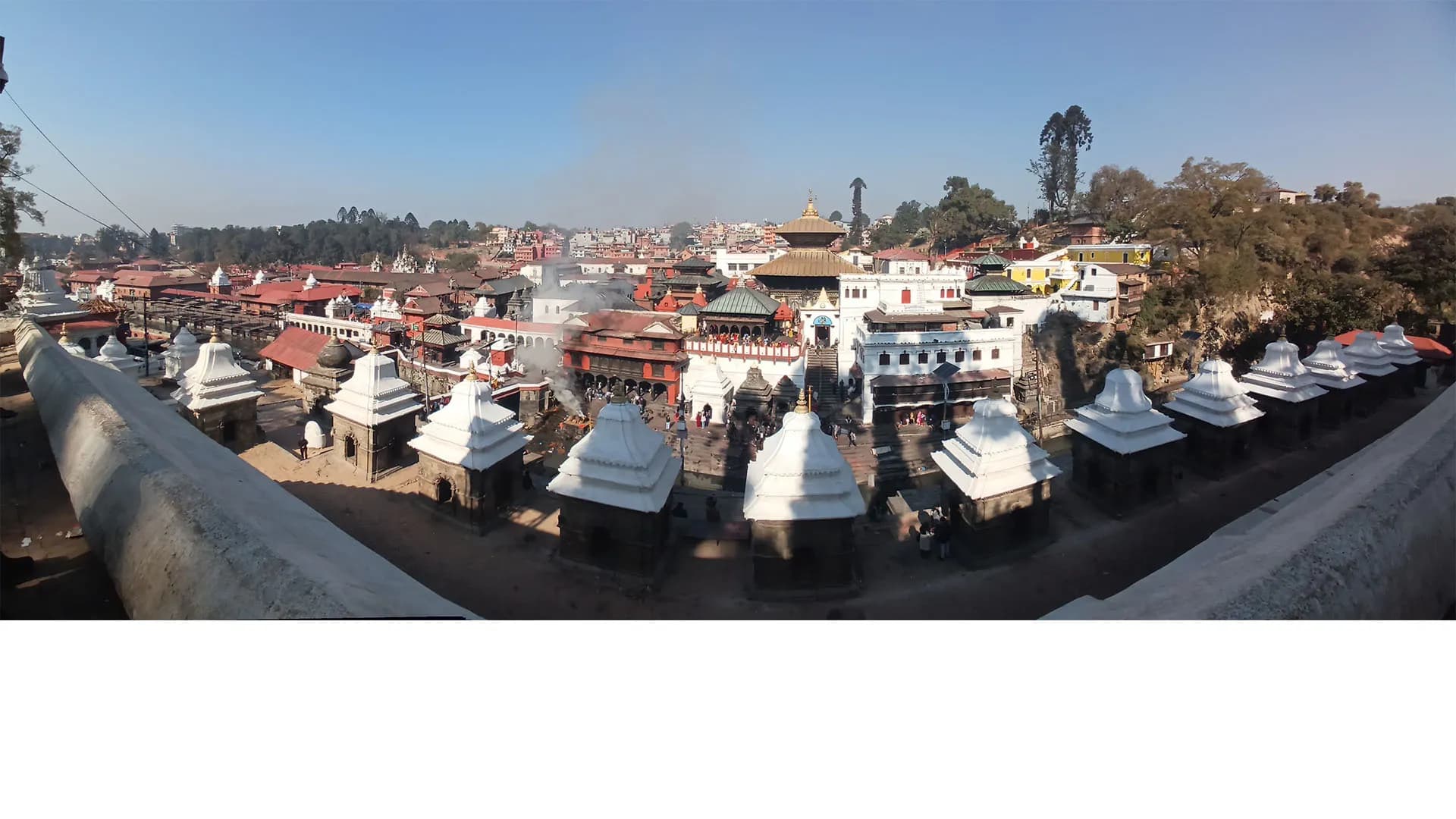
Pashupatinath Temple
Nepal's holiest Hindu shrine — a UNESCO World Heritage Site on the sacred Bagmati River in Kathmandu, dedicated to Lord Shiva as Pashupati, the Lord of all living beings.


About Pashupatinath Temple
Pashupatinath Temple is the most sacred Hindu temple in Nepal and one of the most important Shiva temples in the world. Located on the banks of the holy Bagmati River in Kathmandu's eastern outskirts, this sprawling temple complex has been the spiritual heart of the Hindu faith in Nepal for over 1,500 years. The name "Pashupati" means "Lord of all living beings" — a manifestation of Lord Shiva as the compassionate protector of every creature on Earth.
Designated a UNESCO World Heritage Site in 1979, the Pashupatinath complex extends across 246 hectares and contains over 518 temples, monuments, and ashrams. The main temple is a stunning example of Newari pagoda architecture — a two-tiered golden roof with four silver-plated doors, rising 23 meters above the sacred Bagmati. Only Hindus may enter the main temple sanctum, where the legendary Pancha Mukhi (five-faced) Shivalinga is enshrined — one of the most revered objects of worship in all of Hinduism.
Pashupatinath is considered equivalent to a Jyotirlinga, placing it among the supreme pilgrimage destinations for Shaivites worldwide. The temple complex straddles both banks of the Bagmati River, with the western bank home to the main shrine and the eastern bank offering a powerful vantage point for visitors to observe the sacred cremation ceremonies on the Arya Ghat. These cremation rituals, performed continuously on raised stone platforms along the river, are among the most profound spiritual experiences in South Asia — a direct encounter with the Hindu understanding of death, liberation, and the eternal cycle of rebirth.
The temple draws devotees from every tradition within Hinduism — Shaivites, Vaishnavites, and Shaktas alike — as well as spiritual seekers from around the world. During Maha Shivaratri, the Great Night of Shiva celebrated in February or March, over one million pilgrims converge on Pashupatinath for a night-long vigil of prayer, fasting, and devotion, making it one of the largest religious gatherings in South Asia. Sadhus (Hindu ascetics) from across India and Nepal gather in their hundreds, their ash-smeared bodies and matted hair a living link to traditions thousands of years old.
Beyond its religious significance, the complex is a masterpiece of Nepali art, architecture, and cultural heritage. Every stone carving, brass image, and wooden lattice window tells a story spanning sixteen centuries of continuous worship. Pashupatinath is not merely a temple — it is a living city of faith where birth, death, devotion, and daily life flow together like the sacred Bagmati itself.
Why Visit Pashupatinath Temple
 Nepal's holiest Hindu temple and most important Shiva shrine
- UNESCO World Heritage Site since 1979
- Witness sacred cremation ceremonies on the Bagmati River ghats
- See the legendary five-faced Shivalinga (Pancha Mukhi)
- Experience Maha Shivaratri with 1 million+ pilgrims
- Encounter sadhus (Hindu ascetics) in their spiritual practice
- Explore 518+ temples across a 246-hectare complex
- Marvel at exquisite Newari pagoda architecture with golden roofs
History & Mythology
Pashupatinath's history reaches back to at least the 5th century BCE, when the forested banks of the Bagmati River were already considered sacred by the people of the Kathmandu Valley. Archaeological evidence and inscriptions suggest that organized worship of Shiva as Pashupati — the Lord of Animals — was well established here long before the first documented temple structures.
The earliest recorded temple at this site was built during the Licchavi period, attributed to King Supuspadev (464–505 AD), who is credited with constructing the original linga shrine. An inscription by Licchavi King Jayadeva II dated 753 AD confirms the temple's importance during this era, referencing endowments and rituals that indicate a thriving pilgrimage center. The Licchavi period saw the development of the temple complex's core structures and the establishment of the Bhatta priest lineage from South India that continues to perform daily rituals to this day.
The Malla dynasty (12th–18th century) transformed Pashupatinath from a single shrine into the vast complex visible today. King Shivasimha Malla (1578–1620 AD) made extensive additions, and the 1692 CE major renovation under King Bhupalendra Malla gave the main temple much of its current form — the distinctive two-tiered golden pagoda roof, four silver doors, and the surrounding courtyard. During this period, 37 new temples were added to the complex, and the ghats along the Bagmati were formalized as cremation platforms.
The devastating 2015 earthquake (7.8 magnitude) caused significant damage across the Kathmandu Valley, but the main Pashupatinath temple survived largely intact — a testament to the engineering genius of Newari pagoda architecture. Several surrounding structures were damaged and have since been restored. Today, the Pashupati Area Development Trust (PADT), established by the government, manages the complex's conservation, daily operations, and the delicate balance between religious practice, heritage preservation, and the millions of visitors who come each year.
Historical Timeline
Ancient Sacred Site
Earliest religious activity along the Bagmati River banks. The area is recognized as a sacred Shaivite site by the people of the Kathmandu Valley.
First Documented Temple
Licchavi King Supuspadev (464–505 AD) builds the original linga shrine. The Bhatta priest lineage from South India is established for daily rituals.
Malla Period Expansion
King Shivasimha Malla and successors add 37 temples, formalize cremation ghats, and complete the major 1692 renovation giving the main pagoda its current golden-roofed form.
UNESCO World Heritage Designation
Pashupatinath is inscribed as a UNESCO World Heritage Site, recognizing its outstanding universal value as a masterpiece of Hindu temple architecture and living religious tradition.
Earthquake Resilience & Conservation
The main temple survives the 7.8 magnitude earthquake largely intact. Surrounding structures are restored. The Pashupati Area Development Trust (PADT) manages ongoing conservation.
Mythology & Legends
The Deer Legend
According to the most beloved origin story, Lord Shiva once assumed the form of a deer and roamed freely through the forests along the Bagmati River, delighting in their beauty. When the other gods sought to bring him back to his duties, they found him by grasping his broken antler. The antler fragment sank into the earth and transformed into the sacred lingam now worshipped as the Pashupatinath Shivalinga — Shiva in his form as Lord of Animals (Pashu-pati).
The Kamadhenu Legend
Another ancient legend tells of Kamadhenu, the divine wish-fulfilling cow. She would visit a particular spot on the Bagmati's bank each day and pour her milk continuously onto the ground. Intrigued, local herdsmen dug at the spot and discovered a naturally formed Shivalinga buried in the earth — radiating divine energy. A shrine was built over it, and the site grew into the great temple complex known today.
The Five Faces of Shiva
The sacred Pancha Mukhi lingam enshrined in the main temple represents five cosmic aspects of Lord Shiva: Tatpurusha (East) representing meditation and the soul, Aghora (South) representing destruction and transformation, Vamadeva (North) representing grace and preservation, Sadyojata (West) representing creation and rebirth, and Ishana (Zenith/Sky) representing the all-pervading cosmic consciousness. Together, the five faces embody the totality of Shiva's power over the universe.
Sacred Rituals & Practices
Key Attractions
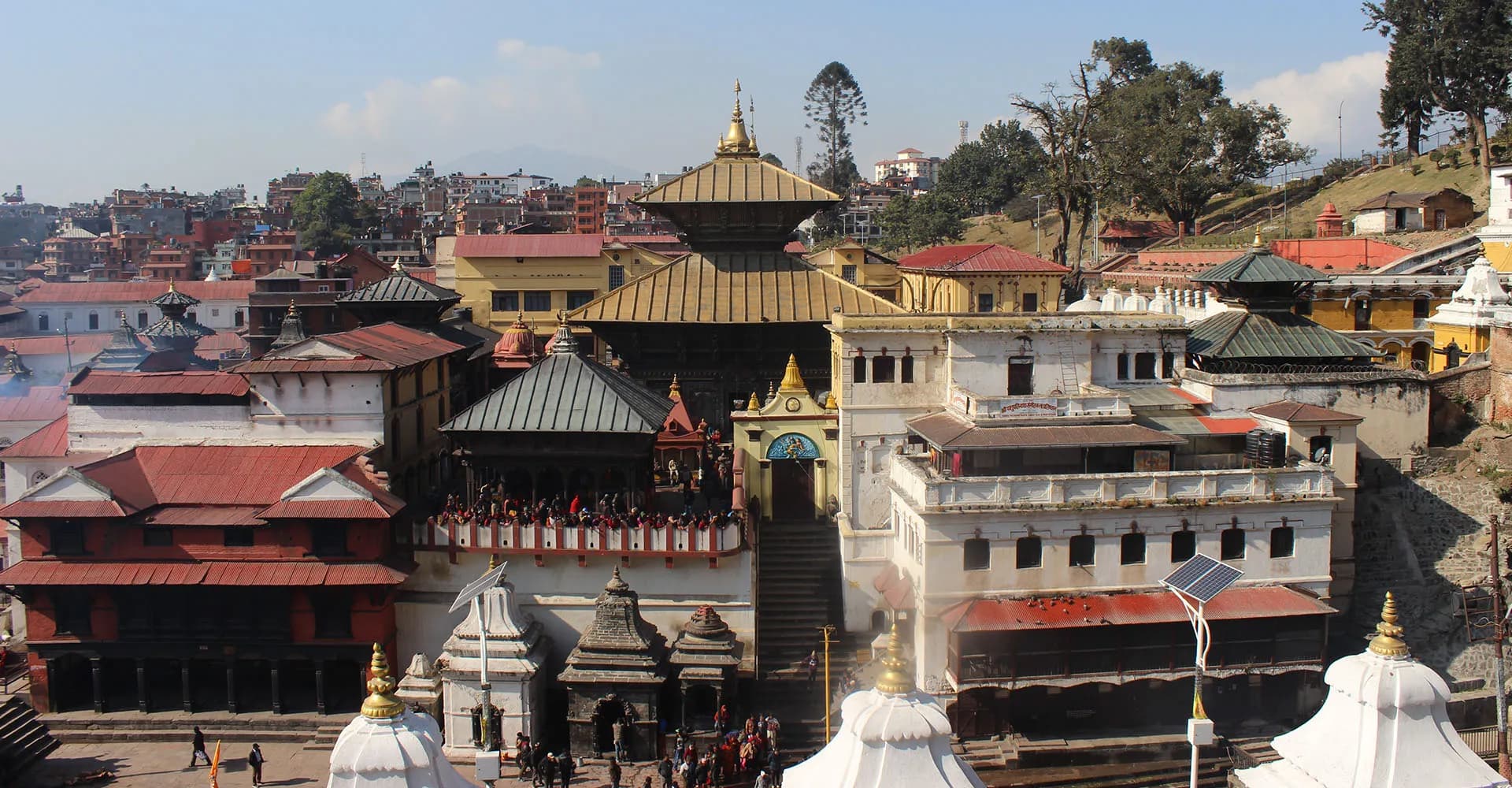

Main Pashupatinath Pagoda
The main temple is a masterpiece of Newari pagoda architecture — a two-tiered golden roof made of copper gilt, four silver-plated doors facing each cardinal direction, and an overall height of 23 meters. The inner sanctum houses the sacred Pancha Mukhi (five-faced) Shivalinga. The temple's exterior is adorned with intricate wood carvings, brass images, and gilded ornaments. Only Hindus may enter, but the golden Nandi bull statue and the temple's exterior are visible to all visitors.
Arya Ghat & Cremation Ghats
The sacred cremation platforms line the western bank of the Bagmati River directly in front of the main temple. Arya Ghat is the most prestigious — traditionally reserved for royalty and high-caste Hindus. Bhasmeshvar Ghat serves the general public. Cremation ceremonies take place throughout the day, following ancient Vedic rituals. The sight of funeral pyres burning along the river, with the golden temple rising above, is one of the most iconic and spiritually powerful images of Nepal.
Five-Faced Shivalinga (Pancha Mukhi)
The sacred lingam enshrined in the main temple is believed to have five faces representing Shiva's cosmic aspects — Tatpurusha (East), Aghora (South), Vamadeva (North), Sadyojata (West), and Ishana (Zenith). Each face governs a different dimension of existence, from creation to dissolution. The lingam is dressed in gold and silver vestments and crowned with a golden serpent (Naga). Only the presiding Bhatta priests may touch or dress the lingam.
Golden Nandi Statue
A massive golden (brass-gilt) statue of Nandi, Shiva's divine bull and primary vahana (vehicle), faces the main temple entrance from across the courtyard. Nandi is considered the gatekeeper of Shiva and the ideal devotee — always facing his Lord in eternal meditation. Devotees whisper prayers into Nandi's ear, believing he will relay them directly to Shiva. The statue is one of the largest and finest Nandi images in Nepal.
Panch Deval (Five Temples)
A distinctive row of five identical stone Shiva temples on the eastern bank of the Bagmati, directly facing the cremation ghats. Built in the 15th century during the Malla period, these temples now serve as rest houses for sadhus and ascetics, particularly during Maha Shivaratri. The Panch Deval is one of the most photographed structures in the complex and offers an excellent vantage point for viewing the ghats.
Slesh Mantak Forest & Deer Park
A sacred forest within the temple complex on the eastern bank, home to free-roaming spotted deer, langur monkeys, and various bird species. Hindu mythology considers this the forest where Shiva roamed in his deer form. The forest contains numerous ancient shrines, meditation caves, and the Gorakhnath hilltop temple. It provides a peaceful, shaded area for contemplation away from the busier ghat areas.
Gorakhnath Temple
A hilltop shrine dedicated to the medieval saint Gorakhnath, a revered figure in the Nath Shaivite tradition. Perched on a hill within the Slesh Mantak forest, the temple offers panoramic views of the entire Pashupatinath complex, the Bagmati River, and the Kathmandu Valley. The climb is short but steep, rewarding visitors with one of the best perspectives of the temple complex.
Ram Mandir & Vishwaroop Temple
Additional major shrines within the complex that represent the diversity of Hindu worship at Pashupatinath. The Ram Mandir is dedicated to Lord Rama, while the Vishwaroop Temple houses a striking image of Vishnu in his universal form. These temples demonstrate that while Pashupatinath is primarily a Shaivite site, all major Hindu traditions are honored within its walls.
Hindu & Buddhist Coexistence
Shaivite Sacred Heart
Pashupatinath stands as the supreme Shiva shrine of Nepal and one of the most revered Shaivite pilgrimage centers in all of South Asia. The temple's status as a Jyotirlinga equivalent places it among the holiest destinations for devotees of Lord Shiva worldwide. The Bhatta priest lineage has maintained unbroken ritual traditions for over a thousand years, and cremation on the Arya Ghat is considered the most auspicious departure from earthly life — guaranteeing the soul's liberation (moksha).
- Shiva as Pashupati — Lord of all living beings (animals and humans)
- Jyotirlinga equivalent — among the supreme Shiva pilgrimage sites
- Moksha through cremation on the sacred Bagmati ghats
- Bhatta priests' exclusive rituals maintained for over 1,000 years
- One of 275 Paadal Petra Sthalams in Shaivite tradition
- Pancha Mukhi lingam represents Shiva's five cosmic aspects
In the Valley of the Buddha
The Kathmandu Valley occupies a unique position in world religion — a place where Hindu and Buddhist traditions have coexisted and intermingled for over two millennia. Boudhanath Stupa, one of the largest Buddhist stupas in the world, stands just 3 kilometers from Pashupatinath. Tibetan Buddhist refugees have established monasteries throughout the area, and both traditions share deep reverence for the sacred geography of the valley.
- Boudhanath Stupa — one of the world's largest Buddhist stupas — is just 3km away
- Tibetan Buddhist monasteries and refugee communities in the surrounding area
- Shared Himalayan spiritual traditions crossing religious boundaries
- Swayambhunath (Monkey Temple) sits across the valley as a Buddhist counterpart
- Buddhist and Hindu festivals often overlap in the Kathmandu calendar
- Meditation and ascetic practices common to both traditions practiced in the complex
Shared Sacred Elements
- Both traditions honor the sacred Bagmati River as a source of spiritual purification
- Meditation and ascetic practices are common to both Hindu sadhus and Buddhist monks in the area
- Festival celebrations draw both Hindu and Buddhist communities together
- Slesh Mantak forest is considered sacred in multiple spiritual traditions
Where Science Meets Faith
The phenomena at this sacred site have fascinated both scientists and devotees for centuries.
The Sacred Cremation Fire
 Scientific Explanation
Open-air cremation on the Pashupatinath ghats reaches temperatures of approximately 800°C over a 3-4 hour burn. The process uses 300-400 kg of wood per cremation. The resulting ash contains calcium phosphate, calcium carbonate, and trace minerals. Environmental scientists have studied the cremation process here to develop more efficient and less polluting techniques, leading to the introduction of electric cremation platforms alongside traditional pyres.
 Spiritual Significance
In Hindu belief, fire (Agni) is the messenger between the human and divine realms. Cremation releases the soul (atman) from the physical body, freeing it to continue its journey toward moksha. The ashes consigned to the Bagmati are believed to carry the soul to the divine realm. The eldest son lighting the pyre at the head of the body is considered the greatest act of filial duty (dharma) — releasing the parent's soul from earthly bonds.
Bagmati River: Holy & Polluted
Scientific ExplanationThe Bagmati River originates in the Shivapuri hills north of Kathmandu and flows through the city before joining the Ganges system. Decades of urbanization have severely polluted the river — studies show high levels of coliform bacteria, heavy metals, and organic waste. The Bagmati Action Plan and PADT have undertaken restoration efforts including waste management, sewage treatment, and seasonal clean-up drives. The river's flow varies dramatically between monsoon (June-September) flooding and dry-season trickle.
Spiritual SignificanceThe Bagmati is revered as the Kathmandu Valley's equivalent of the Ganges — a sacred river with the power to wash away sins and carry souls to liberation. Ritual bathing in the Bagmati before entering Pashupatinath is considered purifying. The river's flow from the sacred Shivapuri hills to the temple symbolizes the journey of the soul from earthly existence to divine union. Despite its pollution, devotees continue to regard the Bagmati as spiritually pure — a distinction between material and spiritual purity central to Hindu philosophy.
Newari Pagoda Engineering
Scientific ExplanationThe main Pashupatinath temple exemplifies Newari pagoda architecture — a multi-tiered timber-frame system that proved remarkably earthquake-resistant during the 2015 earthquake (7.8 magnitude). The structure uses interlocking wooden beams without nails, copper-gilt roof technology developed over centuries, and a wooden lattice (jhingati) system that allows controlled flexing during seismic events. The golden roof uses a technique of hammering gold leaf onto copper sheets, creating a durable gilded surface that has survived centuries of monsoon rain.
Spiritual SignificanceThe golden roofs represent divine radiance — Shiva's cosmic light made visible on Earth. The multi-tiered structure symbolizes ascending realms of consciousness, from the earthly base to the pinnacle pointing toward the infinite sky. Each tier of the pagoda represents a level of spiritual achievement, with the golden finial (gajur) at the summit symbolizing the ultimate union with the divine. The four silver doors facing the cardinal directions represent Shiva's omnipresence — accessible from all directions, welcoming all sincere seekers.
How to Reach Pashupatinath Temple
Route Steps
Nepal's only international airport, located in Kathmandu
Use prepaid taxi counter at the airport, or book via Pathao/InDrive apps. Distance: 6km
The western gate (main entrance) is the primary entry point. Purchase your entry ticket at the counter.
 Pros
Pros- Shortest route from the airport — just 6km
- Prepaid taxi counter eliminates haggling
- Ride-share apps (Pathao, InDrive) offer cheaper alternatives
- Kathmandu traffic can extend travel time significantly during rush hours
- Airport taxis may overcharge if you skip the prepaid counter
Best Time to Visit
Green-bordered months are the recommended times to visit.
January
2°C – 19°C
15mm
Flights: Clear skies, cold mornings
Cold winter month with clear skies. Morning fog possible. Good for temple visits with fewer crowds. Layer up for early morning darshan.
February✓ Best
4°C – 21°C
20mm
Flights: Clear skies, warming
Maha Shivaratri month — the biggest event of the year draws 1M+ pilgrims. If you want the festival experience, this is the time. Book accommodation months ahead.
March✓ Best
8°C – 25°C
30mm
Flights: Pleasant, occasional haze
Spring arrives with pleasant weather. Holi festival adds color. Post-Shivaratri crowds thin but remain significant. Excellent month for visiting.
April✓ Best
12°C – 28°C
55mm
Flights: Warm, pre-monsoon showers possible
Warming temperatures and occasional pre-monsoon showers. Good visiting conditions overall. Nepali New Year (Baisakh) celebrations add cultural interest.
May
16°C – 30°C
100mm
Flights: Hot, increasing rain
Hottest month in Kathmandu. Pre-monsoon rains begin. Temple area can be hot in the afternoon. Visit early morning to avoid heat.
June
19°C – 29°C
250mm
Flights: Monsoon begins, heavy rain
Monsoon season begins. Heavy rainfall and occasional flooding of the Bagmati. The temple remains open but the ghats may be partially submerged. Carry rain gear.
July
20°C – 29°C
350mm
Flights: Peak monsoon, daily rain
Peak monsoon with daily heavy rains. The temple complex can be muddy and slippery. Fewer tourists but local devotees continue daily worship. Not ideal for visiting.
August
19°C – 29°C
320mm
Flights: Monsoon rain continues
Monsoon continues but Teej and Janai Purnima festivals bring large crowds of Nepali women devotees. A unique cultural experience despite the weather.
September
18°C – 28°C
200mm
Flights: Late monsoon, rain decreasing
Monsoon wanes toward month's end. Dashain preparations begin. The valley starts to clear up with improving visibility and decreasing rain.
October✓ Best
13°C – 27°C
50mm
Flights: Clear skies, best weather
Peak season begins. Dashain and Tihar — Nepal's two biggest festivals — bring massive celebrations. Perfect weather with clear skies and comfortable temperatures.
November✓ Best
7°C – 23°C
10mm
Flights: Clear, cooling
Excellent visiting month with clear skies, low humidity, and pleasant temperatures. Bala Chaturdashi and Chhath Puja draw devotees. Peak tourist season.
December
3°C – 20°C
10mm
Flights: Cold, clear skies
Cold but dry with clear skies. Fewer crowds than Oct-Nov. Early morning visits are chilly. A peaceful time to experience the temple without the peak season rush.
Festival Calendar
Maha Shivaratri
The Great Night of Shiva — the single most important event at Pashupatinath. Over one million pilgrims gather for an all-night vigil of prayer, fasting, and devotion. Sadhus from across South Asia converge on the complex, many having walked for weeks. Free darshan is offered throughout the night. Bonfires blaze across the temple grounds. It is the most intense and transformative spiritual experience available at any Hindu temple.
Teej
A major women's festival where married Hindu women fast and pray for their husbands' longevity and their families' well-being. Tens of thousands of women dressed in red saris flood Pashupatinath, singing, dancing, and performing rituals along the Bagmati. Unmarried women pray for good husbands. The temple becomes a sea of red and gold.
Bala Chaturdashi
A unique overnight vigil where devotees stay awake the entire night at Pashupatinath, then scatter seven types of grain seeds along a prescribed route through the temple complex at dawn. Each seed is offered in memory of a deceased family member, with the belief that the seeds will nourish the departed souls in the afterlife.
Dashain
Nepal's longest and most important national festival, celebrating the victory of good over evil. At Pashupatinath, special pujas and animal sacrifices (increasingly symbolic) are performed. The temple sees massive footfall throughout the 15-day festival. Tika and jamara (rice seedlings) blessings are exchanged.
Tihar / Deepawali
The Festival of Lights transforms Pashupatinath into a glittering spectacle. Thousands of oil lamps and candles illuminate the temple complex and ghats. Each day of the five-day festival honors a different being — crows, dogs, cows, and finally brothers and sisters. The temple's golden roof gleams under the light of countless diyas.
Janai Purnima (Raksha Bandhan)
The Sacred Thread Festival — Hindu men of the Brahmin and Chhetri castes renew their janai (sacred thread) at Pashupatinath. The temple also sees large crowds for Raksha Bandhan, when sisters tie protective threads on their brothers' wrists. A colorful and emotionally rich day at the temple.
Chhath Puja
Originally a Maithili and Bhojpuri tradition, Chhath has become widely celebrated in Kathmandu. Devotees wade into the Bagmati near Pashupatinath to offer prayers to the setting and rising sun, standing in the river with offerings of fruits and sweets on bamboo trays. A visually stunning ceremony.
Ekadashi
Observed twice each lunar month, Ekadashi is a fasting day that draws increased numbers of pilgrims to Pashupatinath. Devotees abstain from grains and spend the day in prayer and meditation at the temple. The atmosphere is notably more devotional and contemplative on Ekadashi days.
Altitude Sickness Guide
Pashupatinath is at 1,400m — altitude sickness is not a concern. However, visitors should be aware of Kathmandu's air quality, monsoon weather risks, and general health precautions for Nepal travel.
Symptoms to Watch
 Air pollution in Kathmandu Valley — wear a mask on high-pollution days (particularly winter mornings)
- Monsoon-season waterborne illnesses — drink only bottled or purified water
- Extreme heat during May-June (temperatures exceed 30°C) — stay hydrated and avoid midday sun
- Food safety — stick to cooked food from reputable restaurants near the temple
Prevention Tips
- Carry a reusable water bottle and drink only purified or bottled water
- Wear comfortable walking shoes — the temple complex covers 246 hectares of varied terrain
- Apply sunscreen and carry an umbrella for sun and rain protection
- Keep basic medications accessible — nearest major hospital is Norvic International (3km)
Acclimatization Schedule
| Day | Activity | Altitude |
|---|---|---|
| Day 1 | Arrive in Kathmandu, rest and recover from travel | 1,400m |
| Day 2 | Morning darshan at Pashupatinath, explore the full temple complex | 1,400m |
| Day 3 | Combine with Boudhanath Stupa (3km away) or Kathmandu Durbar Square | 1,400m |
Accommodation Guide
Temple trust dharamshalas and basic guesthouses in the Gaushala area near the temple. Simple rooms with basic amenities, ideal for pilgrims seeking a devotional experience rather than luxury.
Pashupatinath Dharamshala
NPR 500–1,000/nightWithin temple complex area
Gaushala Guesthouses
NPR 800–1,500/nightGaushala, 500m from temple
Boudha Budget Hostels
NPR 500–1,200/nightBoudhanath area, 3km from temple
Food & Cuisine Guide
Dal Bhat
VegNPR 200–500Nepal's national dish — steamed rice with lentil soup, vegetable curries, pickles (achaar), and papad. Served on a thali plate. 'Dal Bhat power, 24 hour' is the local saying about this energizing meal. Available at every restaurant near the temple.
Momos
Non-VegNPR 150–350Nepali-Tibetan steamed dumplings filled with vegetables, chicken, or buffalo meat. Served with spicy tomato-sesame chutney. The quintessential Kathmandu street food. Vegetarian versions widely available near the temple area.
Newari Khaja Set
Non-VegNPR 300–600A traditional Newari feast plate featuring beaten rice (chiura), marinated buffalo meat, black-eyed beans, pickled radish, egg, and various chutneys. A must-try for experiencing authentic Kathmandu Valley cuisine. Vegetarian versions substitute meat with tofu or extra vegetables.
Sel Roti
VegNPR 30–60Traditional Nepali ring-shaped sweet bread made from rice flour, deep-fried until crispy on the outside and soft inside. Commonly eaten during festivals and available at tea shops near the temple. Best enjoyed warm with a cup of chiya (Nepali tea).
Chatamari
Non-VegNPR 200–400Often called 'Nepali pizza' — a Newari rice flour crepe topped with minced meat, eggs, and vegetables. Cooked on a flat griddle and served hot. A unique and delicious Kathmandu Valley specialty not found elsewhere.
Juju Dhau (Bhaktapur Yogurt)
VegNPR 80–150The famous 'King of Yogurt' from nearby Bhaktapur — a thick, creamy, slightly sweet yogurt set in traditional clay pots. The clay imparts a unique earthy flavor. Available at Kathmandu restaurants and a perfect dessert after a temple visit.
Temple Prasad
VegNPR 50–200 (donation-based)Sacred food blessed at the temple and distributed to devotees. Typically includes fruits, sweets (laddu, peda), and coconut. Receiving and consuming prasad is an essential part of the pilgrimage experience — believed to carry the deity's blessings.
Restaurant Types
Simple tea shops and snack stalls line the roads approaching Pashupatinath. Serving chiya (milk tea), sel roti, samosas, and basic vegetarian meals. Strictly vegetarian in the immediate temple vicinity. Affordable and convenient for a quick refuel.
The Gaushala neighborhood (500m from the temple) has several small restaurants offering dal bhat, momos, chow mein, and other Nepali staples. More substantial meals than the temple stalls, with both vegetarian and non-vegetarian options.
The Boudhanath area (3km away) has a thriving cafe culture with everything from traditional Tibetan/Nepali food to international cuisine. Popular options include Garden Kitchen, Flavours Cafe, and numerous rooftop restaurants with stupa views.
For a special meal, Kathmandu offers excellent fine dining — from Newari feasts at Dwarika's Hotel to contemporary Asian cuisine at Baber Mahal Revisited. Thamel has hundreds of tourist-oriented restaurants with global menus.
Food Tips
- Vegetarian food is widely available — the immediate temple area is strictly vegetarian
- Newari cuisine (Chatamari, Khaja Set, Juju Dhau) is a must-try while in Kathmandu Valley
- Stay hydrated — drink only bottled or purified water, avoid ice in drinks
- Street momos are delicious but choose vendors with high turnover for freshness
- Try Nepali chiya (milk tea with spices) — served everywhere and wonderfully warming
- Tipping is not mandatory but 10% is appreciated at sit-down restaurants
Budget & Cost Guide
| Category | Budget | Mid-Range | Premium |
|---|---|---|---|
| Accommodation | NPR 500–1,500 | NPR 3,000–6,000 | NPR 10,000–25,000 |
| Food | NPR 300–600/day | NPR 800–1,500/day | NPR 2,000–5,000/day |
| Transport | NPR 500/day (bus/micro) | NPR 1,500/day (taxi/ride-share) | NPR 3,000/day (private car + driver) |
| Entry Fee | NPR 1,000 | NPR 1,000 | NPR 1,000 |
| Puja / Offerings | NPR 200–500 | NPR 1,000–3,000 | NPR 5,000–15,000 |
| Daily Total | NPR 2,500–4,100/day | NPR 7,300–13,000/day | NPR 21,000–49,000/day |
Budget
NPR 2,500–4,100/day / dayMid-Range
NPR 7,300–13,000/day / dayPremium
NPR 21,000–49,000/day / dayPacking Checklist
Clothing
| Essential | Additional |
|---|---|
| Modest clothes (shoulders and knees covered) | Rain jacket or umbrella (monsoon season) |
| Comfortable walking shoes | Light layers for early morning visits |
| Scarf or dupatta (for temple visits) | |
| Socks (for walking inside temple areas) |
Spiritual Items
| Essential | Additional |
|---|---|
| Bilva (bael) leaves for Shiva offerings | |
| Flowers and incense sticks | |
| Rudraksha mala (prayer beads) | |
| Prasad container |
Health & Medicine
| Essential | Additional |
|---|---|
| Face mask (for Kathmandu air pollution) | Mosquito repellent (monsoon season) |
| Sunscreen (SPF 30+) | |
| Reusable water bottle | |
| Hand sanitizer | |
| Basic medications (paracetamol, antacid, ORS) |
Documents & Essentials
| Essential | Additional |
|---|---|
| Passport (required for foreign nationals) | |
| Entry ticket (purchase at gate) | |
| Hotel booking confirmation | |
| Travel insurance documents | |
| NPR cash for offerings and small vendors |
Electronics
| Essential | Additional |
|---|---|
| Camera (note: no photography inside main temple or at cremations) | |
| Phone with Pathao/InDrive apps installed | |
| Power bank | |
| Universal adapter (Nepal uses Type C/D/M plugs) |
Specialized Guides
Teej Festival
If visiting during Teej (August/September), you'll witness one of the most powerful women-centric festivals in Hinduism. Married women fast and pray for their husbands' longevity while dancing and singing in red saris. It's an unforgettable cultural experience for women travelers.
Dress Code
Modest clothing is essential — shoulders, chest, and knees must be covered. A salwar kameez, sari, or long skirt with a shawl is ideal. Carry a dupatta/scarf that you can drape when entering temple areas. Avoid sleeveless tops and shorts.
Menstruation Customs
Traditional Hindu practice considers menstruating women impure for temple entry. While this is not formally enforced at the gate, be aware that this custom exists and is deeply held by many devotees. The decision is a personal one — respect for the tradition is appreciated.
Safety in Crowds
During major festivals (Shivaratri, Teej, Dashain), crowds can be extremely dense. Travel in groups when possible. Keep valuables in a front body pouch. Avoid isolated areas of the complex after dark. The tourist police are helpful and approachable.
Photo Gallery
Nearby Attractions
Boudhanath Stupa
3 kmOne of the largest Buddhist stupas in the world and a UNESCO World Heritage Site. The massive white dome topped with Buddha's all-seeing eyes is the spiritual center of Kathmandu's Tibetan community. Ringed by monasteries, shops, and rooftop cafes — a Tibet-in-Kathmandu experience.
Guhyeshwari Temple
200 mOne of the 51 Shakti Peethas — sacred sites where parts of Goddess Sati's body are believed to have fallen. Located within walking distance of Pashupatinath along the Bagmati, this powerful Tantric temple is dedicated to Adi Shakti. Open to Hindus only.
Gorakhnath Temple
500 m (within complex)A hilltop shrine dedicated to the medieval saint Gorakhnath, perched above the Slesh Mantak forest within the Pashupatinath complex. The short steep climb rewards visitors with panoramic views of the entire temple complex, the Bagmati valley, and the Kathmandu skyline.
Slesh Mantak Forest
Within complexThe sacred forest on the eastern bank is home to free-roaming spotted deer, langur monkeys, and ancient trees. Hindu mythology considers this the forest where Shiva roamed in his deer form. A peaceful retreat for meditation and nature walks within the temple grounds.
Tilganga Institute of Ophthalmology
1 kmFounded by Dr. Sanduk Ruit, known as the 'God of Sight,' this institute has restored vision to hundreds of thousands of people across Asia and Africa through low-cost cataract surgery. A remarkable humanitarian institution near the temple.
Kathmandu Durbar Square
6 kmThe historic royal palace complex in the heart of old Kathmandu. A UNESCO World Heritage Site featuring stunning Newari architecture, the living goddess Kumari's residence, and ancient temples. Essential for understanding Kathmandu's history and culture.
Swayambhunath (Monkey Temple)
8 kmOne of the oldest religious sites in Nepal — a Buddhist stupa perched on a hilltop overlooking the entire Kathmandu Valley. The 365-step climb is rewarded with breathtaking panoramic views and the iconic all-seeing Buddha eyes gazing across the valley.
Frequently Asked Questions
Pashupatinath Temple is located on the banks of the Bagmati River in Kathmandu, Nepal — approximately 5 km east of the city center (Thamel) and 6 km from Tribhuvan International Airport. The exact location is in the Gaushala area of Kathmandu Metropolitan City.
Foreigners can enter the Pashupatinath temple complex and explore the grounds, ghats, and surrounding shrines. However, only Hindus are permitted inside the main temple sanctum where the sacred Shivalinga is enshrined. Non-Hindu visitors can view the golden Nandi statue and temple exterior from the courtyard, and observe the cremation ghats from the eastern bank.
The entry fee for foreign nationals is NPR 1,000 (approximately USD 7.50). SAARC country nationals pay NPR 100. Nepali citizens and Indian nationals with valid ID enter free of charge. Tickets are purchased at the gate counters.
The temple complex is open from 4:00 AM to 9:00 PM daily. The main temple opens at 4:00 AM with Mangal Aarti (morning prayer). Evening aarti is performed at dusk (approximately 6:00-7:00 PM). The best time for darshan is early morning (4:00-8:00 AM) when crowds are smallest.
Pashupatinath is Nepal's holiest Hindu temple, dedicated to Lord Shiva as Pashupati (Lord of all living beings). It is a UNESCO World Heritage Site (since 1979), equivalent to a Jyotirlinga, and contains the sacred five-faced Shivalinga. With 518+ temples across 246 hectares, it is the largest temple complex in Nepal and one of the most important Shaivite pilgrimage centers in the world.
Pashupatinath is considered equivalent to a Jyotirlinga — one of the supreme manifestations of Lord Shiva. While the traditional 12 Jyotirlinga list is India-based, Pashupatinath's Pancha Mukhi lingam is revered with equal or greater devotion by millions of Shaivites and is often referred to as the 'Jyotirlinga of Nepal.'
Hindu cremation ceremonies are performed on raised stone platforms (ghats) along the Bagmati River. The deceased is brought on a bamboo bier, ritually bathed in the river, then placed on a pyre of stacked wood. The eldest son lights the fire at the head. The body burns for 3-4 hours. Ashes are then swept into the Bagmati. Cremation here is considered the most auspicious departure from life, guaranteeing the soul's liberation (moksha).
No — photographing cremation ceremonies is considered deeply disrespectful to the grieving families and should be avoided. Photography of the temple exterior, ghats (without close-ups of cremations), and the general complex is permitted. No photography is allowed inside the main temple sanctum. Always ask permission before photographing sadhus, as some expect a small donation in return.
The Pancha Mukhi (five-faced) Shivalinga is the sacred object of worship inside the main temple. Its five faces represent the cosmic aspects of Lord Shiva: Tatpurusha (East/soul), Aghora (South/destruction), Vamadeva (North/grace), Sadyojata (West/creation), and Ishana (Zenith/cosmic consciousness). The lingam is dressed in gold and silver and can only be viewed by Hindus during darshan.
Maha Shivaratri falls in February or March (14th day of the dark half of Phalguna in the Hindu calendar). It is the single biggest event at Pashupatinath, drawing over 1 million pilgrims for an all-night vigil. Sadhus from across South Asia converge on the temple. Free darshan is offered throughout the night. Plan and book accommodation months in advance.
From Thamel, take a taxi or ride-share (Pathao/InDrive app) — it is approximately 5.2 km and takes 20-30 minutes depending on traffic. The route goes via Ring Road through Gausala intersection. Cost: NPR 300-500 by ride-share, NPR 500-800 by taxi. There is no convenient public bus route from Thamel.
Tribhuvan International Airport is just 6 km from the temple. Use the prepaid taxi counter at the airport (NPR 500-700) or book a ride-share via Pathao/InDrive app. The journey takes 15-20 minutes in normal traffic. This is the shortest route to the temple from any major point in Kathmandu.
Dress modestly — shoulders and knees must be covered. A salwar kameez, sari, long skirt, or full-length trousers with a top covering the shoulders are appropriate. Remove shoes and any leather items (belts, bags) before entering temple areas. Carry a scarf or dupatta for additional coverage. Avoid revealing or tight-fitting clothes.
No — leather items (shoes, belts, bags, wallets) should be removed before entering the main temple areas. Cows are sacred in Hinduism, and leather is considered impure in temple precincts. Leave leather items at the shoe storage areas near the entrance or, better, avoid bringing them altogether.
The best months are October, November, February, March, and April — offering clear skies, pleasant temperatures, and major festivals. February/March for Maha Shivaratri (if you want the festival experience), October/November for Dashain and Tihar. Avoid June-September (monsoon) and May (extreme heat). Early morning (4-8 AM) is the best time of day for darshan.
Yes — Pashupatinath and Kathmandu are generally safe for solo female travelers. The temple area is well-patrolled by security and tourist police. Standard precautions apply: dress modestly, be aware of pickpockets in crowds, avoid isolated areas after dark, and keep valuables secure. During Teej festival, the temple is filled with women — a uniquely empowering experience.
Sadhus are Hindu ascetics who have renounced worldly life to pursue spiritual liberation. At Pashupatinath, you'll see them year-round — often with ash-smeared bodies, matted dreadlocks (jata), and ochre or white robes. During Maha Shivaratri, hundreds gather from across India and Nepal. Most are genuine spiritual practitioners; some in tourist areas may pose for photographs for tips.
The evening Bagmati Aarti is a grand fire ceremony performed at dusk on the ghats along the Bagmati River. Priests wave large flaming lamps in synchronized circular motions while devotees chant hymns. Similar to Varanasi's Ganga Aarti, the ceremony creates a deeply spiritual atmosphere as flames reflect on the water. Best viewed from the eastern bank. Held daily, it is especially grand on festivals.
Budget: Temple dharamshalas and Gaushala guesthouses (NPR 500-1,500). Mid-range: Hotels in Boudha/Jorpati area (NPR 3,000-6,000) like Hotel Tibet International. Premium: Dwarika's Hotel (2km, NPR 15,000+), Hyatt Regency (3km, NPR 12,000+). The Boudhanath area offers the best balance of proximity, dining options, and accommodation quality.
Yes — vegetarian food is widely available. The immediate temple area is strictly vegetarian. Tea stalls near the entrance serve snacks and simple vegetarian meals. Gaushala restaurants (500m away) offer dal bhat and vegetarian momos. The Boudhanath area (3km) has numerous cafes with full vegetarian menus. Kathmandu in general is very vegetarian-friendly.
The site has been sacred since at least the 5th century BCE. The first documented temple was built by Licchavi King Supuspadev (464-505 AD). The Malla dynasty (12th-18th century) expanded the complex dramatically — King Shivasimha Malla (1578-1620) and the major 1692 renovation gave the temple its current golden-roofed form. It became a UNESCO World Heritage Site in 1979 and survived the devastating 2015 earthquake largely intact.
Yes — the Slesh Mantak forest on the eastern bank is an ideal meditation spot within the complex. The sacred deer park area has benches and quiet spaces among ancient trees. Several ashrams within the complex also welcome visitors for meditation. Early morning (before 7 AM) is the most peaceful time. The forest is also used by sadhus and ascetics for their own contemplative practices.
Major festivals include: Maha Shivaratri (Feb/Mar — the biggest event), Teej (Aug/Sep — women's festival), Bala Chaturdashi (Nov/Dec — night vigil), Dashain (Oct — Nepal's biggest festival), Tihar/Deepawali (Oct/Nov — festival of lights), Janai Purnima (Aug — sacred thread ceremony), and Chhath Puja (Nov — sun worship). Ekadashi fasting is observed twice monthly.
The Pashupatinath complex contains over 518 temples, monuments, and religious structures spread across 246 hectares. Major structures include the main Pashupatinath pagoda, Panch Deval (five Shiva temples), Gorakhnath Temple, Ram Mandir, Vishwaroop Temple, Guhyeshwari Temple, and hundreds of smaller shrines, lingams, and religious monuments. It is the largest temple complex in Nepal.