Muktinath Temple
The sacred abode of Lord Vishnu at 3,710m in the Mustang district — a pilgrimage site revered by both Hindus and Buddhists for centuries.


About Muktinath Temple
Muktinath Temple, also known as Mukti Kshetra ("the place of liberation"), is one of the most sacred pilgrimage sites in Nepal. Perched at an altitude of 3,710 meters in the Mustang district, this ancient temple is dedicated to Lord Vishnu and holds the extraordinary distinction of being one of the 108 Divya Desam — the only one located outside India.
The temple complex sits against the dramatic backdrop of the Annapurna and Dhaulagiri mountain ranges, overlooking the deepest gorge on Earth — the Kali Gandaki valley. For Hindus, Muktinath represents one of the eight most sacred shrines of Vishnu (Svayam Vyakta Kshetras), where the deity is believed to have self-manifested. For Buddhists, the site is known as Chumig Gyatsa ("Hundred Waters") and is considered a place of great spiritual power where Guru Padmasambhava (Guru Rinpoche) is said to have meditated.
What makes Muktinath truly unique is the presence of all five elements — Panch Tatva — in one place: water (108 sacred waterspouts), earth (the Shaligram stones), fire (the eternal natural gas flame at Jwala Mai), sky (the open Himalayan horizon), and wind (the ever-present mountain breeze). This convergence of elements is believed to bestow moksha (liberation from the cycle of rebirth) upon pilgrims who visit with devotion.
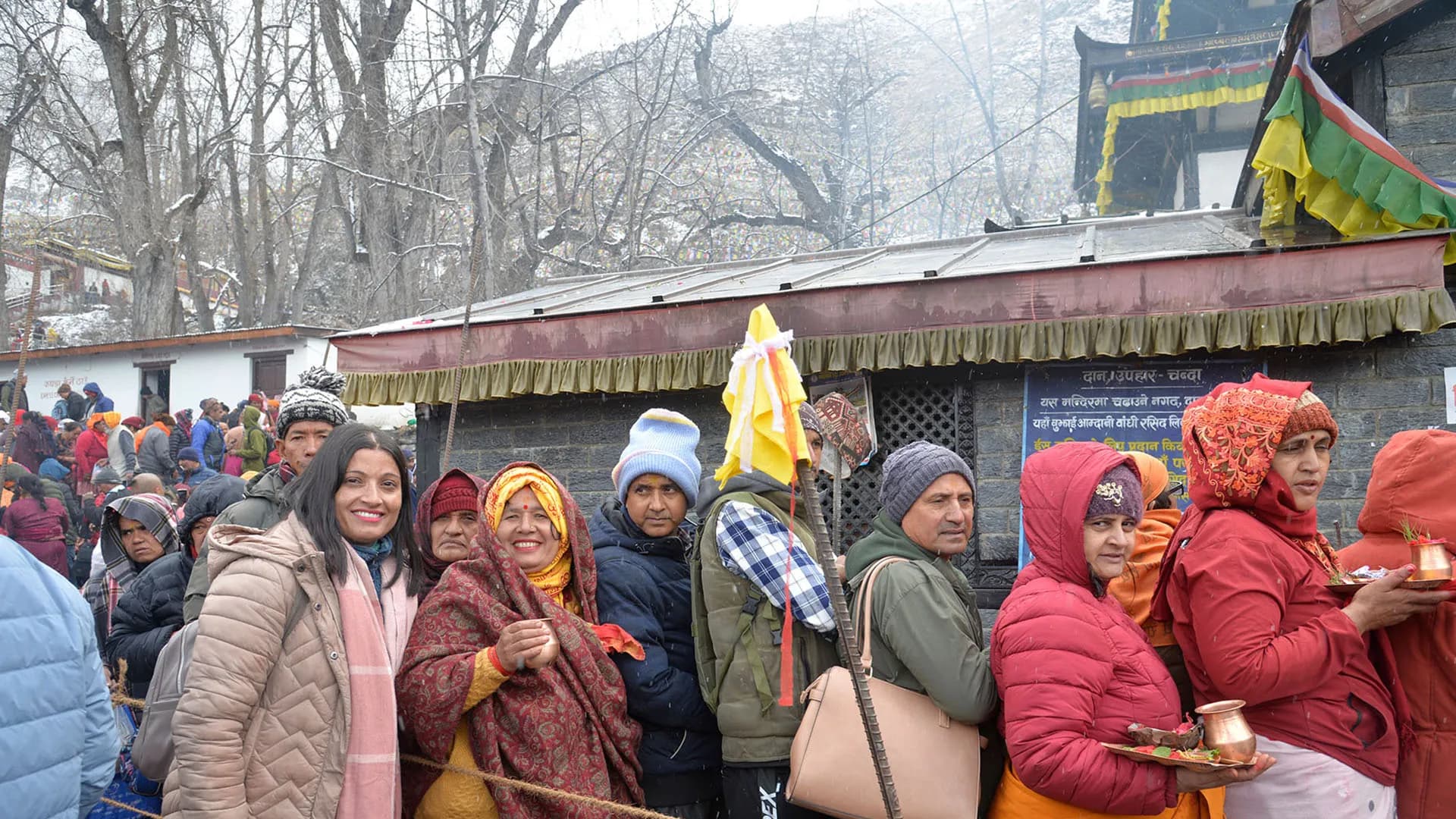
Every year, tens of thousands of devotees — primarily from India and Nepal — make the journey to Muktinath to bathe in the icy waters of the 108 Mukti Dhara (waterspouts), offer prayers at the main Vishnu temple, and witness the miraculous eternal flame burning alongside a natural water spring at Jwala Mai. The temple is managed by a Tibetan Buddhist nunnery, a living testament to the interfaith harmony that defines this sacred site.
Why Visit Muktinath Temple
 One of the 108 Divya Desam — the only one outside India
- Sacred to both Hindus and Buddhists for over 2,000 years
- Witness all five elements (Panch Tatva) in one place
- Bathe at the 108 Mukti Dhara sacred waterspouts for moksha
- See the miraculous eternal flame at Jwala Mai Temple
- Stunning Himalayan backdrop with Annapurna & Dhaulagiri peaks
- Collect sacred Shaligram stones from the Kali Gandaki river
- Experience unique Hindu-Buddhist coexistence with Buddhist nuns managing a Hindu shrine
History & Mythology
Muktinath's history stretches back thousands of years, deeply intertwined with the spiritual traditions of both Hinduism and Buddhism. The earliest references to this sacred site appear in ancient Hindu scriptures, where it is mentioned as Shaligram Kshetra — a land where the sacred Shaligram stones (ammonite fossils considered to be natural manifestations of Lord Vishnu) are found in abundance along the Kali Gandaki River.
According to Hindu tradition, the site's sanctity was established during the Vedic period. The Skanda Purana describes Muktinath as a place where Lord Brahma performed a fire sacrifice (yagna), and a natural flame miraculously emerged alongside water — the phenomenon still visible today at Jwala Mai. The Vishnu Purana references it as one of the places where salvation is guaranteed to those who worship with a pure heart.
In Buddhist tradition, the great tantric master Guru Padmasambhava (Guru Rinpoche) is believed to have visited and meditated at this site in the 8th century during his journey from India to Tibet. His spiritual practice here is said to have consecrated the ground, making it sacred in the Tibetan Buddhist tradition as well.
The current temple structure dates primarily to the early 19th century (around 1815 AD), though worship at the site is far more ancient. The pagoda-style temple houses a gold-plated image of Lord Vishnu along with images of Goddess Lakshmi and other deities. In modern times, the temple has undergone several renovations, most notably in the 1970s and again in the 2010s, while preserving its ancient architectural character. The Muktinath Area Conservation Project (MACP) now oversees the site's preservation.
Historical Timeline
Earliest References
Ancient scriptures mention Shaligram Kshetra. The site is recognized as a Svayam Vyakta Kshetra where Vishnu self-manifested.
Guru Padmasambhava's Visit
The great Buddhist master Guru Rinpoche meditates at Muktinath during his journey from India to Tibet, sanctifying the site in Buddhist tradition.
Temple Construction
The current pagoda-style temple is built, housing a gold-plated Vishnu image. Buddhist nuns are appointed as custodians — a tradition that continues today.
Modern Restoration
Major renovations preserve the temple while improving pilgrim infrastructure. The Muktinath Area Conservation Project (MACP) is established for ongoing preservation.
Mythology & Legends
Legend of the 108 Springs
According to Hindu mythology, the 108 waterspouts represent the 108 names of Lord Vishnu. Bathing under each spout washes away one lifetime of sins, and completing all 108 grants moksha — liberation from the cycle of rebirth. The water is believed to flow directly from the heavens.
Origin of Shaligram Stones
Legend holds that Vishnu transformed into the Shaligram stone to escape a curse from Goddess Tulsi. Scientifically, these are 150-million-year-old ammonite fossils from the ancient Tethys Sea. Devotees believe finding a Shaligram in the Kali Gandaki brings immense spiritual merit.
Guru Rinpoche's Meditation
Buddhists believe that Guru Padmasambhava chose this site for meditation because of its extraordinary natural energy — the convergence of fire, water, earth, wind, and sky. His practice is said to have opened the path to enlightenment at this location for all future practitioners.
Sacred Rituals & Practices
Key Attractions

108 Mukti Dhara (Sacred Waterspouts)
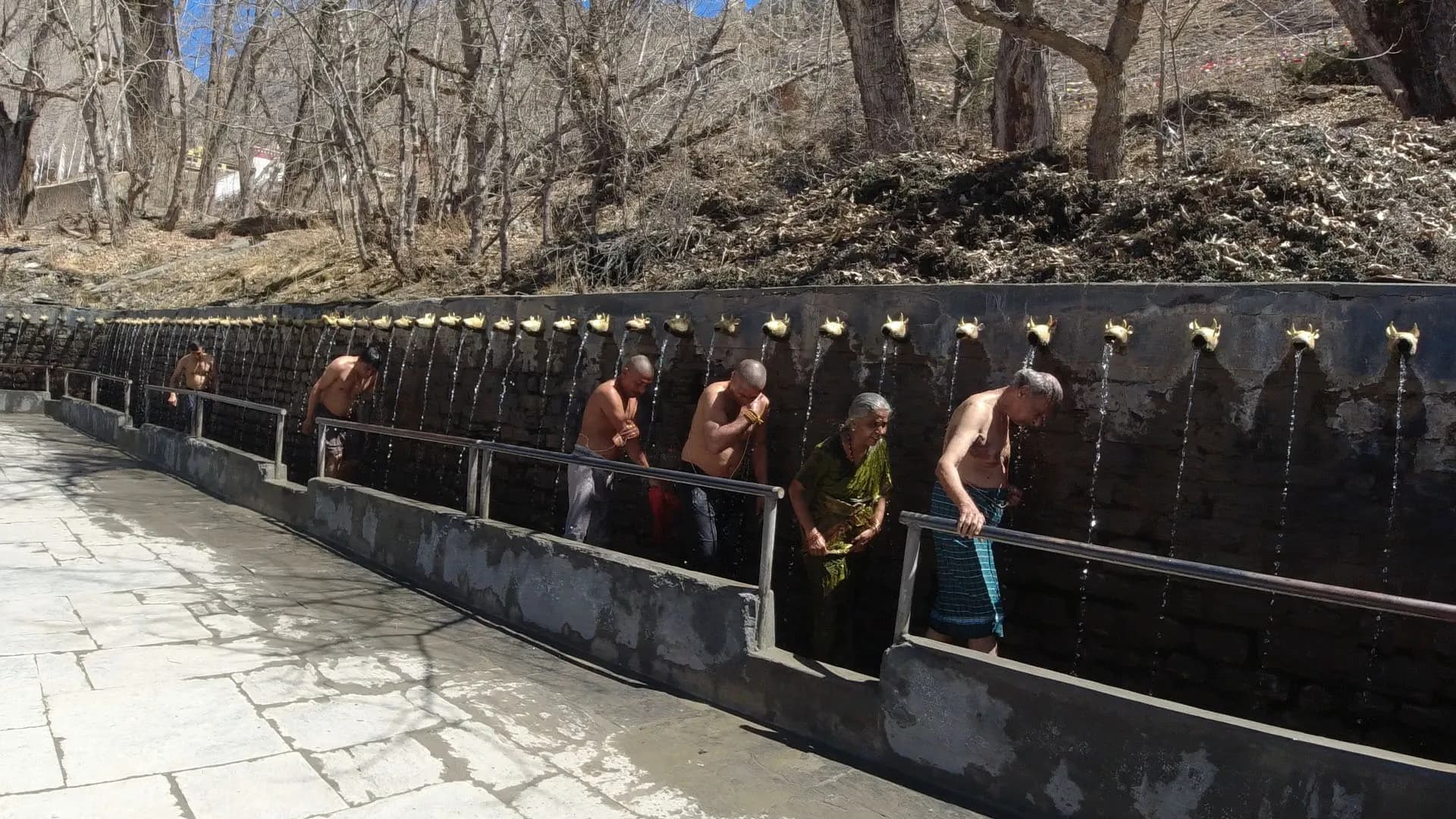
The iconic 108 water spouts carved as bull heads (Gomukh) arranged in a semicircular wall. Fed by natural mountain springs, these waterspouts pour icy water that pilgrims bathe under for spiritual purification. Each spout is said to represent one of the 108 names of Lord Vishnu. The sight of devotees moving from spout to spout, chanting prayers despite the freezing cold, is among the most powerful spiritual experiences in the Himalayas.
Jwala Mai Temple (Eternal Flame)
A small temple housing one of the world's most remarkable natural phenomena — an eternal flame fueled by natural gas that burns alongside a water spring. The coexistence of fire and water in one place represents the miraculous union of opposing elements and is considered the most sacred feature of Muktinath. Hindus revere it as the divine flame of Goddess Jwala Mai, while geologists attribute it to underground natural gas seeping through rock fissures.
Main Temple (Mukti Narayan)
The pagoda-style temple at the center of the complex houses a gold-plated statue of Lord Vishnu (as Mukti Narayan), along with images of Goddess Lakshmi, Saraswati, Janardana, and other deities. Built around 1815 AD, the temple reflects traditional Nepali architecture and is maintained by Tibetan Buddhist nuns — a unique interfaith arrangement that has persisted for centuries.
Shaligram Fossil Beds (Kali Gandaki)
The Kali Gandaki River valley below Muktinath is one of the world's most important fossil sites. The black Shaligram stones found here are 150-million-year-old ammonite fossils from the ancient Tethys Sea. Hindus consider them natural manifestations of Lord Vishnu and worship them in homes and temples across South Asia. Collecting Shaligrams from the riverbed near Kagbeni is a key pilgrimage activity.
Kali Gandaki Gorge
The Kali Gandaki river has carved the deepest gorge on Earth — measuring over 5,500 meters between the peaks of Annapurna I (8,091m) and Dhaulagiri (8,167m) on either side. The gorge provides the dramatic geographical context for Muktinath and the ancient trade route between Tibet and India. The views from Muktinath looking down into the gorge are truly awe-inspiring.
Ranipauwa Village
The small settlement at the base of Muktinath Temple serves as the gateway for all pilgrims. With guesthouses, tea shops, and small restaurants, Ranipauwa provides essential services for visitors. The village offers stunning views of the Annapurna and Dhaulagiri ranges and serves as the starting point for the short uphill walk to the temple complex.
Chumig Gyatsa (Buddhist Name)
Buddhists know Muktinath as Chumig Gyatsa, meaning 'Hundred Waters.' The entire complex is considered a sacred dakini (female spiritual being) site. Buddhist prayer flags flutter throughout the complex, mani stones line the paths, and the temple's management by Tibetan Buddhist nuns reflects the deep Buddhist connection to this site. It is one of the 24 Tantric places in the Buddhist tradition.
Hindu & Buddhist Coexistence
Hindu Perspective
For Hindus, Muktinath is Mukti Kshetra — the field of liberation. It is revered as one of the 108 Divya Desam (sacred abodes of Lord Vishnu celebrated by the Alvar saints), the only one outside India.
- One of 8 Svayam Vyakta Kshetras where Vishnu self-manifested
- 106th of the 108 Divya Desam celebrated by the 12 Alvar saints
- Bathing at 108 Mukti Dhara grants moksha (liberation from rebirth)
- Presence of all Panch Tatva (five elements) in one sacred spot
- Shaligram stones are worshipped as natural forms of Lord Vishnu
- Jwala Mai flame represents the divine feminine energy (Shakti)
Buddhist Perspective
For Buddhists, the site is Chumig Gyatsa ('Hundred Waters'). It is one of the 24 Tantric places and holds deep significance in Tibetan Buddhism.
- One of the 24 Tantric places in Tibetan Buddhist tradition
- Guru Padmasambhava (Guru Rinpoche) meditated here in the 8th century
- Considered a sacred dakini site with powerful spiritual energy
- Buddhist nuns have managed the temple for over 200 years
- Prayer flags, mani stones, and Buddhist iconography throughout
- The coexistence of elements is seen as proof of tantric power
Shared Sacred Elements
- Both traditions honor the sacred waterspouts and eternal flame
- Dual priesthood: Hindu priests conduct pujas while Buddhist nuns manage the complex
- Parallel naming: Muktinath (Hindu) / Chumig Gyatsa (Buddhist)
- Shared belief in the purifying power of the 108 sacred waters
- Both traditions recognize the site as a place of liberation/enlightenment
- Festivals from both traditions are celebrated throughout the year
Where Science Meets Faith
The phenomena at this sacred site have fascinated both scientists and devotees for centuries.
The Eternal Flame of Jwala Mai
 Scientific Explanation
The flame is caused by natural gas (primarily methane) seeping through geological faults in the rock from underground deposits. The gas reaches the surface where it encounters atmospheric oxygen and ignites. Small amounts of water seep through the same fissures, creating the remarkable fire-and-water phenomenon. Similar natural gas seeps exist worldwide (e.g., Chimera fires in Turkey), though the combination with flowing water at Muktinath is exceptionally rare.
 Spiritual Significance
Hindus worship the flame as Goddess Jwala Mai (the flame goddess), a manifestation of divine Shakti. The simultaneous presence of fire and water — opposing elements — is considered proof of divine intervention. Buddhists see it as evidence of the tantric power inherent in this sacred place.
Shaligram Stones: 150 Million Years of History
Scientific ExplanationShaligram stones are fossilized ammonites dating back 150-200 million years to the Jurassic and Cretaceous periods. They originate from the ancient Tethys Sea that once covered what is now the Himalayan region. When the Indian tectonic plate collided with the Eurasian plate, the sea floor was pushed upward, bringing these marine fossils to extreme altitudes. The spiral patterns in Shaligrams are the preserved shells of extinct cephalopods.
Spiritual SignificanceHindus consider Shaligrams to be svayambhu (self-manifested) forms of Lord Vishnu. The spiral pattern is seen as the Sudarshana Chakra (Vishnu's divine discus). A household with a Shaligram is considered to be blessed, and the stone is worshipped daily in many Hindu homes. Different types of Shaligrams are associated with different forms of Vishnu.
The 108 Waterspouts: Himalayan Hydrology
Scientific ExplanationThe 108 waterspouts are fed by natural underground springs originating from snowmelt and rainfall percolating through the porous limestone and metamorphic rock of the Annapurna range. The water travels through underground aquifers before emerging at the temple site. The consistent flow even during dry seasons suggests deep aquifer sources. The water is naturally cold (2-5°C) due to its high-altitude underground journey.
Spiritual SignificanceThe 108 waterspouts are sacred in both Hindu and Buddhist numerology. In Hinduism, 108 represents the cosmic wholeness — the 27 constellations × 4 quarters, the 12 zodiac signs × 9 planets, and the 108 names of Vishnu. Bathing under all 108 spouts is believed to wash away sins from 108 lifetimes. The bull-head (Gomukh) design connects to Nandi, the sacred bull.
How to Reach Muktinath Temple
Route Steps
Drive through the Kali Gandaki valley on paved highway
Road follows the river gorge, views of waterfalls and terraced hills
Road becomes rougher, ascending gradually through dense forest
Dramatic landscape change from lush green to arid Mustang terrain
Final stretch by Scorpio through Kagbeni and up to Ranipauwa
 Pros
Pros- Most affordable option
- Scenic drive through Kali Gandaki gorge
- Stop at Tatopani hot springs
- 6-10 hours total drive
- Road can be rough and dusty
- Landslide risk during monsoon (Jun-Aug)
Best Time to Visit
Green-bordered months are the recommended times to visit.
January
-10°C to 5°C
10mm
Flights: Moderate
Harsh winter. Heavy snow possible. Temple accessible but very cold. Only for hardy travelers.
February
-8°C to 8°C
15mm
Flights: Moderate
Late winter. Snow begins to melt. Clearer skies toward end of month. Fewer crowds.
March✓ Best
-3°C to 12°C
20mm
Flights: Good
Early spring. Warming temperatures. Roads opening up. Good visibility. Season starting.
April✓ Best
2°C to 16°C
25mm
Flights: Good
Peak spring season. Warm days, cool nights. Rhododendrons blooming. Excellent time to visit.
May✓ Best
5°C to 18°C
40mm
Flights: Good
Late spring. Warmest pre-monsoon month. Great for pilgrimage. Buddha Jayanti celebrations.
June
8°C to 18°C
65mm
Flights: Poor
Monsoon begins. Rain increases. Road landslide risk. Flights frequently cancelled. Not ideal.
July
10°C to 18°C
110mm
Flights: Poor
Peak monsoon. Heavy rainfall. Road travel risky. Most infrastructure reduced. Avoid if possible.
August
9°C to 17°C
100mm
Flights: Poor
Monsoon continues. Janai Purnima festival. Lush greenery but difficult travel conditions.
September✓ Best
5°C to 16°C
55mm
Flights: Moderate
Monsoon receding. Season reopening. Dashain preparations. Good visibility returns. Excellent time.
October✓ Best
0°C to 14°C
20mm
Flights: Good
Peak season. Best weather. Crystal-clear skies. Dashain and Tihar festivals. Book well in advance.
November✓ Best
-5°C to 10°C
5mm
Flights: Good
Post-monsoon. Excellent visibility. Getting colder. Chhath Puja pilgrims. Last ideal month.
December
-10°C to 5°C
5mm
Flights: Moderate
Winter setting in. Very cold, especially mornings. Snow possible. Beautiful but challenging.
Festival Calendar
Bisket Jatra
Nepali New Year celebration with chariot processions and cultural festivities throughout the Mustang region. Many pilgrims combine the festival with their Muktinath visit.
Buddha Jayanti (Vesak)
Full moon celebration of Buddha's birth, enlightenment, and death. Special prayers and ceremonies at Muktinath's Buddhist areas. Prayer flags are renewed, and Buddhist nuns perform extended rituals.
Janai Purnima (Raksha Bandhan)
Sacred thread festival. Devotees visit Muktinath to tie new sacred threads and perform ritual bathing. Despite monsoon, this festival draws dedicated pilgrims.
Dashain
Nepal's biggest Hindu festival celebrating Goddess Durga's victory over the demon Mahishasura. 15-day celebration with special pujas at Muktinath. Peak pilgrimage season.
Tihar (Deepawali)
Festival of lights honoring Goddess Lakshmi. Oil lamps illuminate the temple complex. The combination of mountain starlight and festival lamps creates a magical atmosphere.
Chhath Puja
Ancient Vedic festival dedicated to the Sun God. Particularly popular among Bihari and eastern UP pilgrims. Devotees perform rituals at the sacred kundas.
Maha Shivaratri
While primarily a Shiva festival, many pilgrims visit Muktinath as part of an extended pilgrimage circuit that includes Pashupatinath. Special prayers offered at the temple.
Muktinath Mela
Annual fair held at the temple complex. Features cultural programs, religious discourses, and special community celebrations. Draws pilgrims from across Nepal and India.
Altitude Sickness Guide
Muktinath Temple sits at 3,710 meters (12,172 feet) above sea level. At this altitude, the air contains approximately 40% less oxygen than at sea level. Altitude sickness (Acute Mountain Sickness or AMS) can affect anyone, regardless of age or fitness level. Taking proper precautions is essential for a safe pilgrimage.
Symptoms to Watch
 Headache (most common early symptom)
- Nausea or loss of appetite
- Dizziness or lightheadedness
- Fatigue and weakness
- Shortness of breath during mild exertion
- Difficulty sleeping (insomnia)
- Swelling of hands, feet, or face
- Rapid heartbeat at rest
Prevention Tips
- Ascend gradually — spend a night in Jomsom (2,720m) before going to Muktinath
- Stay well hydrated — drink 3-4 liters of water daily
- Avoid alcohol and smoking completely at altitude
- Eat light, high-carbohydrate meals (dal bhat is perfect)
- Try local garlic soup — a traditional high-altitude remedy used by Sherpas
- Carry Diamox (Acetazolamide) — consult your doctor before the trip
- Walk slowly and rest frequently — don't rush the rituals
- Descend immediately if symptoms worsen (headache that doesn't respond to painkillers, confusion, loss of coordination)
Acclimatization Schedule
| Day | Activity | Altitude |
|---|---|---|
| Day 1 | Arrive in Pokhara (827m). Rest and explore the lakeside. | 827m |
| Day 2 | Travel to Jomsom (2,720m). Rest in afternoon. Light walk around town. | 2,720m |
| Day 3 | Visit Kagbeni (2,810m). Gentle exploration. Return to Jomsom. | 2,810m |
| Day 4 | Travel to Muktinath (3,710m). Visit temple. Descend to Ranipauwa/Jomsom after darshan. | 3,710m |
Accommodation Guide
Basic guesthouses in Ranipauwa village, right at the base of Muktinath Temple. Simple rooms with shared bathrooms.
Hotel North Pole
Very AffordableRanipauwa
Muktinath Guest House
Very AffordableRanipauwa
Bob Marley Guest House
Very AffordableRanipauwa
Hotel Buddha
Very AffordableRanipauwa
Food & Cuisine Guide
Dal Bhat
VegAffordableNepal's national dish — lentil soup with rice, seasonal vegetables, pickles, and sometimes curry. Unlimited refills at most places. The perfect high-altitude fuel.
Thukpa
Non-VegAffordableTibetan noodle soup with vegetables or meat in a warm, hearty broth. Extremely comforting in the cold mountain weather. A staple of the Mustang diet.
Momos
Non-VegAffordableNepali dumplings filled with vegetables, chicken, or buffalo meat. Served steamed or fried with spicy tomato chutney. Available at virtually every eatery.
Tibetan Bread
VegVery AffordableDeep-fried flatbread served with honey, jam, or butter. A Mustang specialty and popular breakfast item. Light, fluffy, and satisfying.
Apple Products (Marpha)
VegAffordableMarpha village (2 hrs from Muktinath) is famous for its apples. Apple pie, apple brandy (raksi), apple juice, and dried apples are local specialties worth trying.
Buckwheat Pancakes
VegAffordableLocal specialty made from buckwheat flour grown in the Mustang region. Served with honey or vegetable curry. Nutritious and well-suited for the altitude.
Garlic Soup
VegVery AffordableTraditional Sherpa remedy for altitude sickness. Made with loads of fresh garlic, ginger, and herbs. Widely believed to help with acclimatization. Served at most lodges.
Tsampa (Roasted Barley)
VegVery AffordableTraditional Tibetan staple food. Roasted barley flour mixed with butter tea or water. High-energy food perfect for altitude. An authentic Mustang experience.
Restaurant Types
Most guesthouses have attached restaurants serving dal bhat, momos, noodles, and basic Indian food. The most convenient and common dining option.
Small family-run establishments serving butter tea, thukpa, and tsampa. Authentic Mustang experience with warm hospitality.
Found in Jomsom and some in Ranipauwa. Offer wider menus including pizza, pasta, and continental breakfast alongside Nepali/Indian food.
Food Tips
- Stick to freshly cooked food — avoid raw salads and uncooked items at altitude
- Drink only purified or boiled water — water purification tablets are recommended
- Vegetarian food is widely available and fresh — important for Indian devotees observing dietary restrictions
- Eat dal bhat for lunch — it provides the best sustained energy for altitude activities
- Try garlic soup daily — locals swear by its altitude sickness prevention properties
- Carry energy bars and dry snacks for between meals — restaurants may have limited hours
- Apple products from Marpha are a must-try — the region's specialty
- Inform your lodge about dietary restrictions in advance — options can be limited
Budget & Cost Guide
| Category | Budget | Mid-Range | Premium |
|---|---|---|---|
| Accommodation (per night) | Basic guesthouses | Comfortable hotels | Best available / Luxury |
| Food (per day) | Simple local meals | Good variety of food | Best restaurants available |
| Transport (Pokhara–Muktinath) | Shared bus + Scorpio | Private Scorpio | Helicopter |
| Permits & Entry | Standard fees | Standard fees | Standard fees |
| Guide / Porter | Not included | Local guide included | Experienced guide + porter |
| Miscellaneous | Minimal extras | Moderate extras | All comforts covered |
| Daily Total | Very Affordable | Comfortable & Good Value | Luxury Experience |
Budget
Very Affordable / dayMid-Range
Comfortable & Good Value / dayPremium
Luxury Experience / dayPacking Checklist
Clothing
| Essential | Additional |
|---|---|
| Warm down jacket or fleece | Sandals / flip-flops for lodge use |
| Thermal inner layers (top & bottom) | |
| Waterproof outer shell jacket | |
| Comfortable trekking pants (2 pairs) | |
| Warm woolen cap / beanie | |
| Gloves (fleece or wool) | |
| Warm socks (3-4 pairs) | |
| Sturdy trekking shoes / boots | |
| Quick-dry towel | |
| Change of clothes for bathing ritual | |
| Sunglasses (UV protection) |
Health & Medicine
| Essential | Additional |
|---|---|
| Diamox (Acetazolamide) — consult doctor first | Anti-diarrhea medicine |
| Basic first aid kit | Band-aids and antiseptic cream |
| Sunscreen SPF 50+ | |
| Lip balm with SPF | |
| Water purification tablets | |
| Personal medications | |
| Pain relievers (Ibuprofen/Paracetamol) |
Documents
| Essential | Additional |
|---|---|
| Passport (for non-Indians) / Valid photo ID (for Indians) | Hotel booking confirmations |
| ACAP permit or funds to purchase | |
| Travel insurance documents | |
| Copies of all documents (digital + physical) | |
| Emergency contact list |
Electronics
| Essential | Additional |
|---|---|
| Mobile phone with Nepal SIM / roaming | Camera |
| Power bank (10,000mAh minimum) | |
| Universal adapter (Nepal uses Indian/Type D plugs) | |
| Headlamp / flashlight |
Spiritual Items
| Essential | Additional |
|---|---|
| Thin cloth to dry with after bathing ritual | Offerings (flowers, sweets, vermillion) |
| Sacred thread (janeu) if applicable | |
| Small Shaligram pooja items | |
| Prayer beads (mala) |
Specialized Guides
Safety is Good Overall
Nepal is generally safe for women travelers. The pilgrimage route to Muktinath is well-traveled and local communities are hospitable. However, always travel with at least one companion.
Dress Modestly
Cover shoulders and knees, especially at the temple. Carry a shawl or dupatta for the temple visit. Modest clothing also protects against sun and cold.
Bathing Ritual Tips
Wear a full-body swimsuit or salwar kameez for the 108 Mukti Dhara bathing. Change rooms are available but basic. Quick-dry clothing is recommended. Many women use a large shawl for privacy.
Period Considerations
Some Hindu pilgrims observe restrictions during menstruation. If you plan to bathe at the waterspouts, plan your visit accordingly. There are no formal temple restrictions, but personal beliefs vary.
Solo Women Travelers
If traveling solo, join a group tour for safety and companionship. Keep your hotel informed of your itinerary. Register with your embassy if staying long-term. Keep emergency numbers saved on your phone.
Health Essentials
Carry personal hygiene products as availability is limited in Ranipauwa and Jomsom. Feminine hygiene products are hard to find beyond Pokhara. Pack everything you'll need from the city.
Photo Gallery
Nearby Attractions
Kagbeni
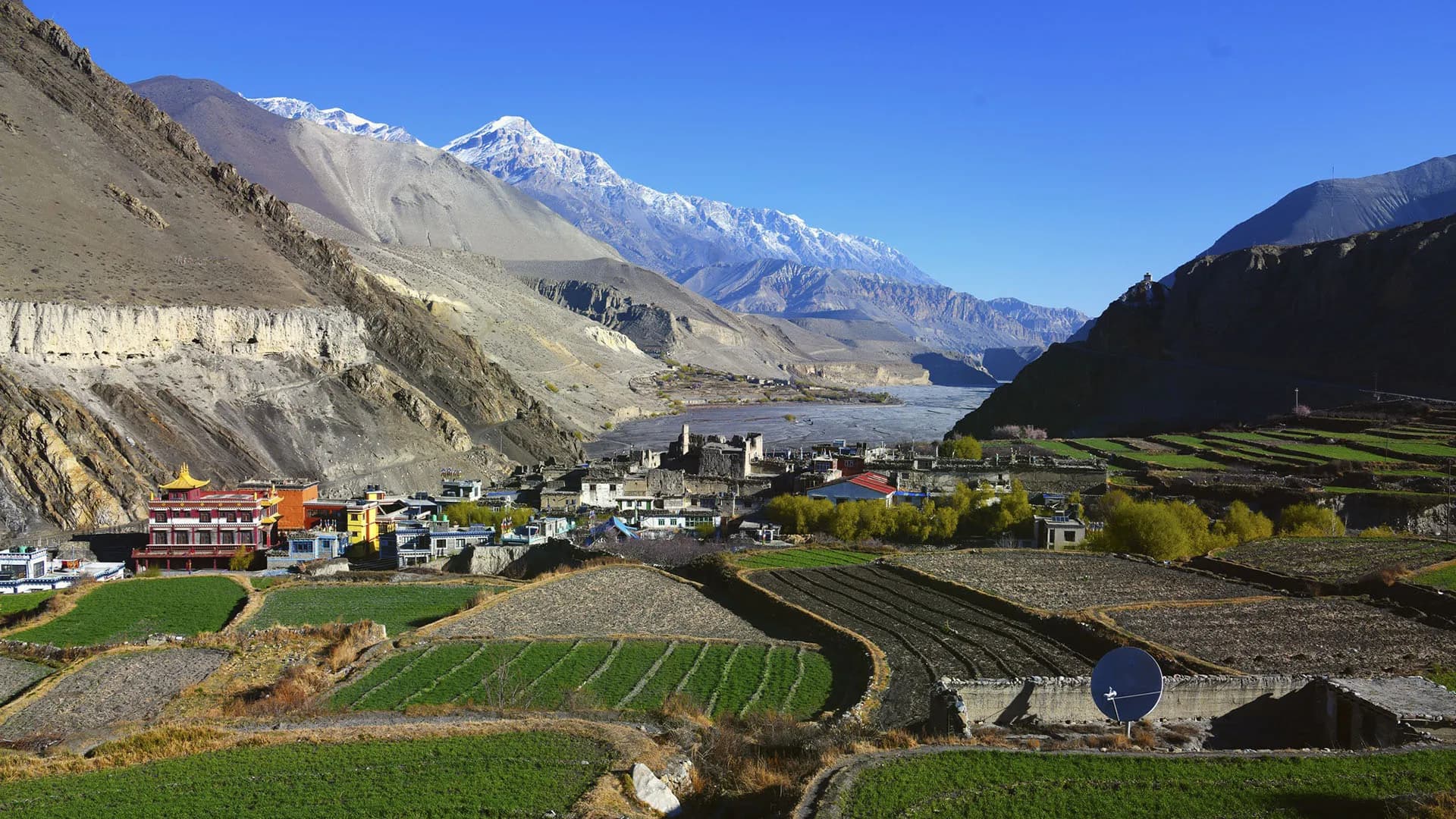
1 hour south by ScorpioMedieval walled village at the confluence of the Kali Gandaki and Jhong rivers. Gateway to Upper Mustang with a 500-year-old monastery.
Jharkot
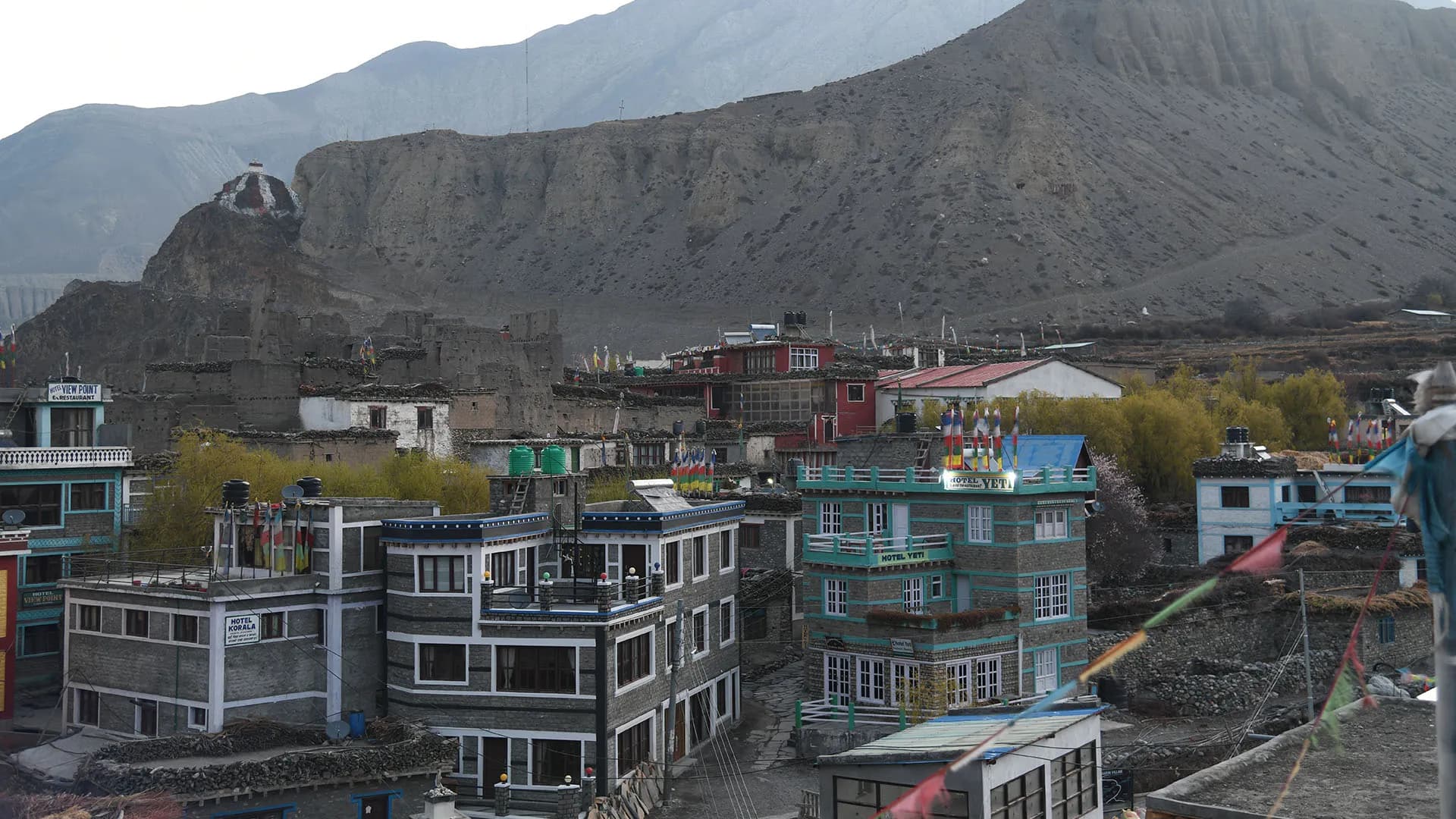
30 minutes walkAncient fortified village with a 500-year-old Buddhist gompa and stunning views of the Annapurna range. Traditional Mustangi architecture.
Ranipauwa
At temple baseThe base village for Muktinath Temple with guesthouses, restaurants, and shops. Starting point for the uphill walk to the temple.
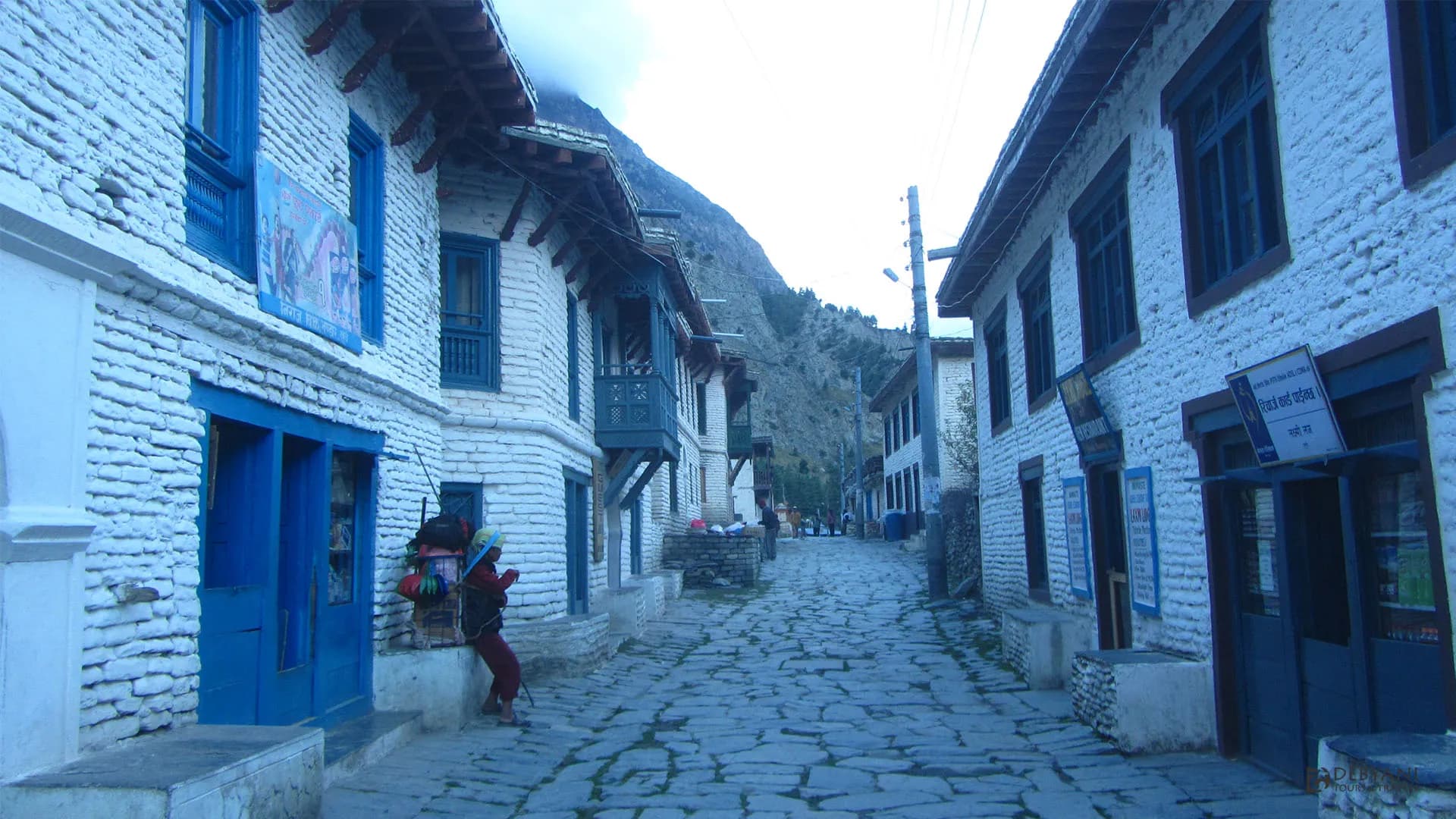
Marpha Village
2 hours southPicturesque whitewashed village famous for its apple orchards and apple brandy. One of the most charming settlements along the Annapurna Circuit.
Jomsom
1 hour south by ScorpioDistrict headquarters of Mustang with an airport, hospitals, and the best infrastructure in the region. Popular base for Muktinath visits.
Dhumba Lake
45 minutes from JomsomSerene alpine lake near Jomsom offering peaceful walks and birdwatching opportunities. A refreshing break from the pilgrimage intensity.
Lupra Village
1.5 hours from JomsomTraditional Thakali village with a Bon-Buddhist monastery — one of the last surviving Bon religious sites in Nepal. Off the beaten path.
Frequently Asked Questions
Muktinath Temple is located in the Mustang district of Nepal, at an altitude of 3,710 meters (12,172 feet) in the Annapurna mountain range. It sits in the Muktinath Valley, overlooking the Kali Gandaki gorge — the deepest gorge in the world. The nearest town is Ranipauwa, and the nearest airport is in Jomsom, about 1.5-2 hours away by Scorpio.
Muktinath Temple sits at 3,710 meters (12,172 feet) above sea level. At this altitude, oxygen levels are approximately 40% lower than at sea level. Proper acclimatization is essential — spending at least one night in Jomsom (2,720m) before visiting Muktinath is strongly recommended to prevent altitude sickness.
Muktinath is sacred to both Hindus and Buddhists. Hindus worship it as Mukti Kshetra (the field of liberation) and it is one of the 108 Divya Desam of Lord Vishnu. Buddhists know it as Chumig Gyatsa (Hundred Waters) and consider it one of the 24 Tantric places. Uniquely, the Hindu temple is managed by Tibetan Buddhist nuns — a rare example of interfaith harmony.
There are 108 sacred waterspouts (Mukti Dhara) at Muktinath. They are arranged in a semicircular wall, with water flowing from carved bull-head (Gomukh) spouts. The number 108 is sacred in Hinduism — representing Vishnu's 108 names. Pilgrims bathe under all 108 spouts for moksha (liberation from the cycle of rebirth). The water temperature is 2-5°C year-round.
Jwala Mai is a small temple below the main Muktinath shrine where an eternal natural gas flame burns alongside a flowing water spring. This remarkable coexistence of fire and water is considered miraculous. Scientifically, the flame is caused by natural methane gas seeping through rock fissures. Hindus worship it as the flame of Goddess Jwala Mai.
From Pokhara, you can reach Muktinath by: (1) Road via Beni-Jomsom (6-10 hours by Scorpio), (2) Flight to Jomsom (20 min) then Scorpio to Muktinath (1.5-2 hrs), or (3) Helicopter directly to Muktinath (35-45 min). The flight option is fastest but weather-dependent. The road route offers scenic views through the Kali Gandaki gorge.
The most popular route from India is via Gorakhpur to the Sonauli-Belahiya border crossing (3-4 hrs), then bus/vehicle to Pokhara (7-8 hrs), and finally to Muktinath by road or flight. Indians don't need a visa — free entry with valid photo ID (Aadhar, Voter ID, or Passport). The total journey from Gorakhpur takes about 16-20 hours of travel spread over 2-3 days.
Yes, Muktinath Temple remains open year-round, including winter (December-February). However, winter visits are challenging due to extreme cold (-10°C to 5°C), possible snowfall, and reduced transport options. Jomsom flights are less reliable in winter. If visiting in winter, be prepared with heavy warm clothing and flexible travel plans.
The best months are March-May (spring) and September-November (autumn). October is the peak month with the clearest skies, pleasant temperatures, and festival celebrations (Dashain, Tihar). April-May offers warm weather and blooming rhododendrons. Avoid June-August (monsoon) for the safest and most comfortable experience.
Yes, you need an Annapurna Conservation Area Permit (ACAP) to visit Muktinath. The permit is available at affordable rates, with discounted fees for SAARC nationals including Indians. You can obtain it at the Nepal Tourism Board office in Kathmandu or Pokhara, or at the ACAP counter in Jomsom. Carry your passport/ID and two passport-size photos.
Muktinath can be visited by elderly pilgrims with proper planning. The safest option for seniors is a helicopter day-trip from Pokhara (35-45 min flight, 2-3 hrs for darshan, same-day return). If traveling by road, spend extra nights acclimatizing. Pony rides are available for the uphill walk. A medical checkup before the trip is essential.
Muktinath Temple is open daily from 6:00 AM to 5:00 PM. The best time to visit is early morning (6-8 AM) when the temple is less crowded and the mountain views are clearest. The bathing ritual at the 108 waterspouts is best done in the early morning hours. During peak season, arriving early helps avoid long queues.
Yes, helicopter tours to Muktinath are available from both Pokhara and Kathmandu. From Pokhara, the flight takes 35-45 minutes. Packages typically include round-trip helicopter, 2-3 hours for darshan, and return same day. This is a premium option — contact us for current pricing based on group size and season. Ideal for elderly pilgrims or those with limited time.
Ranipauwa (temple base) and Jomsom offer dal bhat, momos, thukpa (noodle soup), Tibetan bread, and basic Indian food. Vegetarian food is widely available. Garlic soup is a popular altitude sickness remedy. Water must be purified — carry purification tablets. Marpha village (2 hrs south) is famous for apple products. Options are limited compared to cities.
Accommodation ranges from affordable guesthouses in Ranipauwa to comfortable mid-range hotels in Jomsom. Premium options include Jomsom's best hotels or luxury helicopter day-trips based out of Pokhara. Book in advance during peak season (Oct-Nov). Facilities are basic compared to city standards but improving every year.
Muktinath's history spans thousands of years. Referenced in ancient Vedic scriptures as Shaligram Kshetra, it was sanctified in Buddhist tradition when Guru Padmasambhava meditated here in the 8th century. The current temple was built around 1815 AD in pagoda style. It has been managed by Tibetan Buddhist nuns since its construction — a rare example of Hindu-Buddhist coexistence.
Temperatures vary by season: Spring (Mar-May) ranges from -3°C to 18°C; Summer (Jun-Aug) 8°C to 18°C; Autumn (Sep-Nov) -5°C to 16°C; Winter (Dec-Feb) -10°C to 8°C. The 108 waterspout water is always 2-5°C. Nighttime temperatures can drop below -10°C in winter. Warm layers, thermals, and a good jacket are essential year-round.
Yes, vegetarian food is widely available and well-suited for Hindu pilgrims. Dal bhat (lentils and rice), vegetable momos, seasonal vegetable curries, Tibetan bread, and buckwheat pancakes are all vegetarian options. Most lodges can prepare Jain food (without onion and garlic) with advance notice. Pure vegetarian restaurants are common as many Indian pilgrims visit.
Essential items include: warm down jacket, thermal layers, waterproof outer shell, sturdy trekking shoes, warm cap and gloves, sunscreen SPF 50+, sunglasses, water purification tablets, altitude sickness medication (Diamox), personal medications, quick-dry towel, change of clothes for bathing, power bank, flashlight, and copies of all travel documents.
Shaligram stones are fossilized ammonites (150+ million years old) found in the Kali Gandaki River near Muktinath. Hindus consider them natural manifestations (svayambhu) of Lord Vishnu. The spiral patterns are seen as Vishnu's Sudarshana Chakra. They are worshipped in millions of Hindu homes worldwide. Finding and collecting Shaligrams is a key pilgrimage activity at Muktinath.