Muktinath sits at 3,710 meters in Nepal's Mustang district, and at that altitude the journey is never quite the same twice. The weather shifts quickly, the Jomsom-Muktinath road can turn rough, and the temperature gap between a sunny afternoon and a frozen dawn is wide. Because of this, the season you choose shapes the entire trip - what you see, how easily you get there, and how many people share the temple with you.
Muktinath lies in the rain shadow of the Annapurna and Dhaulagiri massifs, so it is far drier than Pokhara or Kathmandu. That single fact changes everything: even in the monsoon, Muktinath itself stays relatively dry while the lower road sections south of Ghasa take the brunt of the rain. This guide walks through each season and then breaks the year down month by month so you can match the timing to your priorities, whether that is crystal-clear peaks, fewer crowds, or a quiet winter pilgrimage.
There is no single best time that suits everyone. Pilgrims chasing the most comfortable weather lean toward autumn; photographers want the post-monsoon clarity of November; budget travelers and solitude-seekers find the off-season rewarding. Read on, decide what matters most to you, and travel when you can make it happen.
Autumn (September to November): The Peak Window
Autumn is the most popular time to visit Muktinath, and for good reason. The monsoon washes the dust out of the air, so visibility becomes razor sharp and the Annapurna and Dhaulagiri ranges stand out against a deep blue sky. Days are warm and sunny, nights are cold and fresh, and most monsoon damage to the road is repaired by early October.
October is the single best month - stable weather, clear skies and major festivals like Dashain and Tihar. November is colder, especially at dawn, but offers the clearest mountain views of the whole year.
- Skies turn deep blue and visibility is excellent
- A light jacket is enough for daytime temple visits; mornings are cold
- Roads are in good condition and landslide risk is low
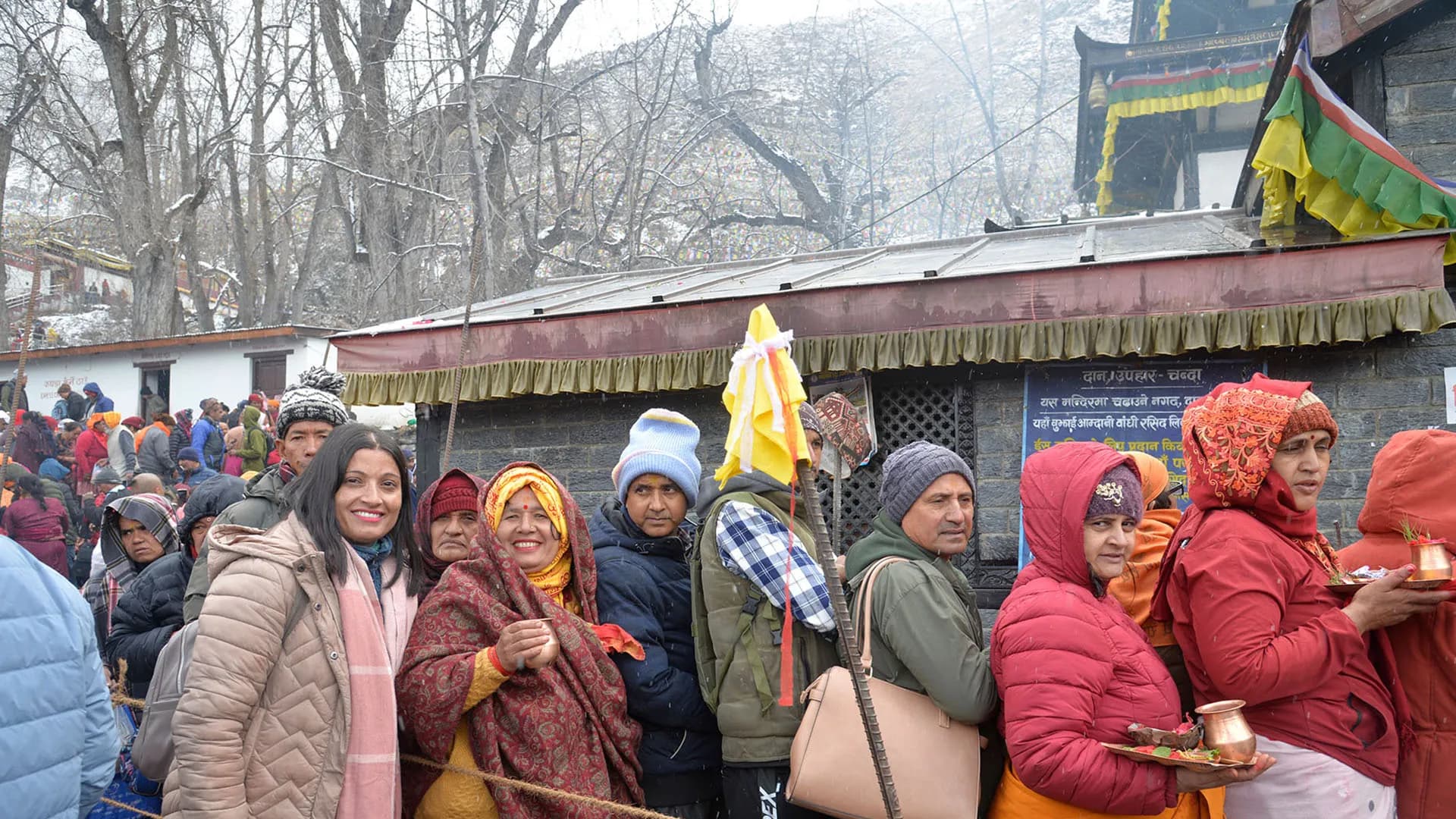
- Expect crowds between roughly 10 AM and 4 PM at the temple
Because this is high season, rooms and Jomsom flights fill up fast and prices rise. Book early and visit the 108 spouts in the early morning for a calmer experience.
Spring (March to May): The Second-Best Season
Spring is the strong runner-up. Winter cold begins to fade, roads reopen by early March, and the skies stay mostly clear. It is a fine choice if you want pleasant temperatures without the full autumn crowds.
Early March can still feel like winter with cold mornings and the odd snow shower, while late April brings genuinely warm afternoons. Snow still caps the peaks, creating a striking contrast with the greening valleys, and snowmelt strengthens the flow from Muktinath's 108 water spouts. Around Marpha, the apple orchards start to flower.
- Fewer tourists mean easier bookings and lower prices than autumn
- Quieter trails and more relaxed time with locals
- Late May turns dusty and windy as the pre-monsoon heat builds
Carry layers - days warm up but nights and early mornings stay cold and crisp.
Monsoon (June to September): Green, Quiet and Underrated
Many guidebooks tell you to avoid the monsoon, but Muktinath rewards flexible travelers in this season. Sitting in the Annapurna rain shadow, it receives far less rain than southern Nepal. Showers tend to arrive in the afternoon or evening with clear spells in between, and some days stay completely dry.
The payoff is a landscape transformed - the usually arid high desert turns lush and green, waterfalls along the trail run at full force, and the 108 spouts flow strongly. With very few other visitors, guesthouses are cheaper and the temple feels peaceful.
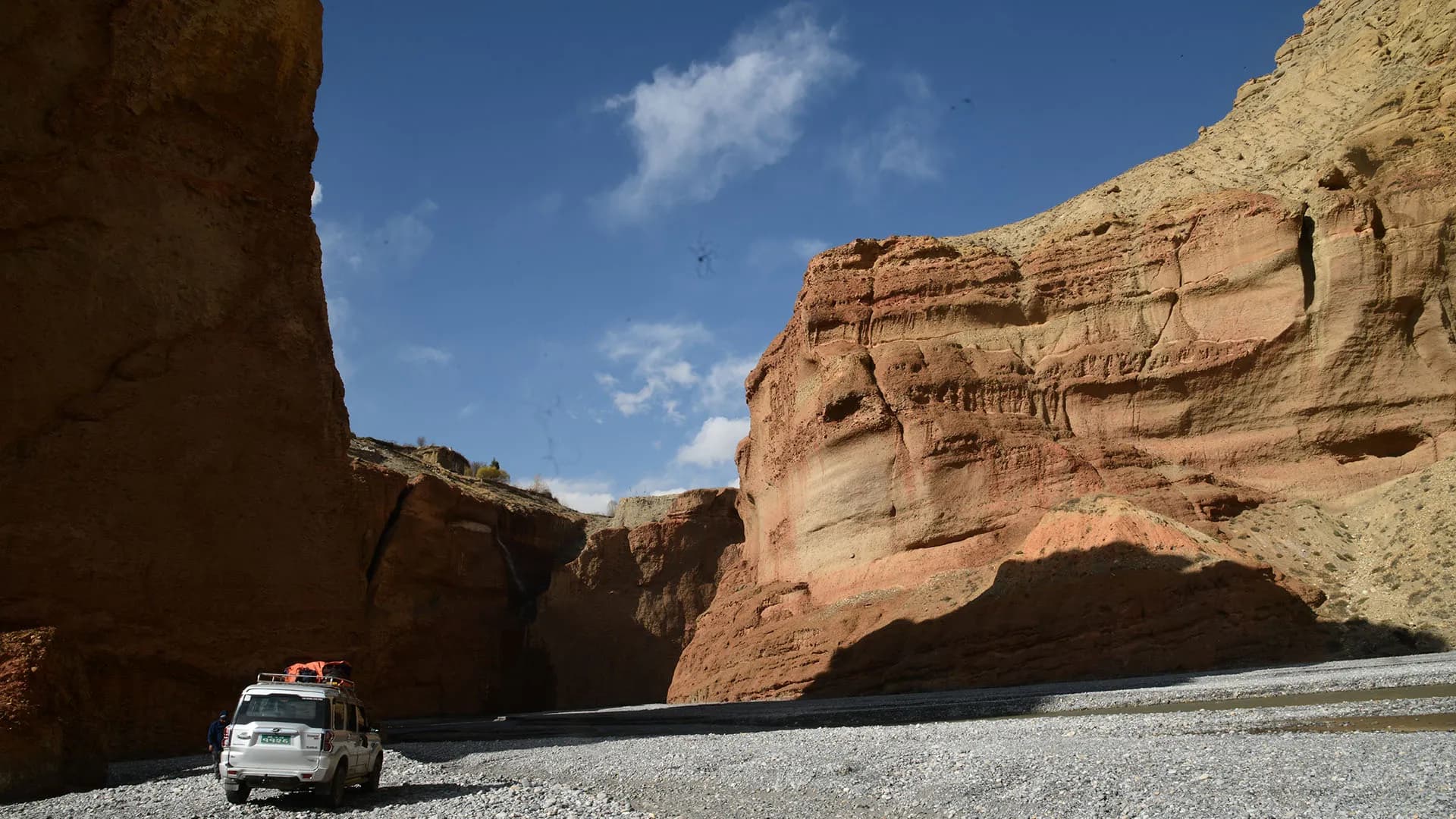
The catch is the road. Lower sections between Beni, Tatopani and Ghasa get heavy rain and occasional landslides, so the route can close for hours or even days, and Jomsom flights are less reliable in morning fog.
- Build extra buffer days into your schedule for possible delays
- Avoid booking international flights immediately after the trip
- Pack rain gear, waterproof bags and sturdy shoes for slippery sections
Winter (December to February): Cold, Snowy and Serene
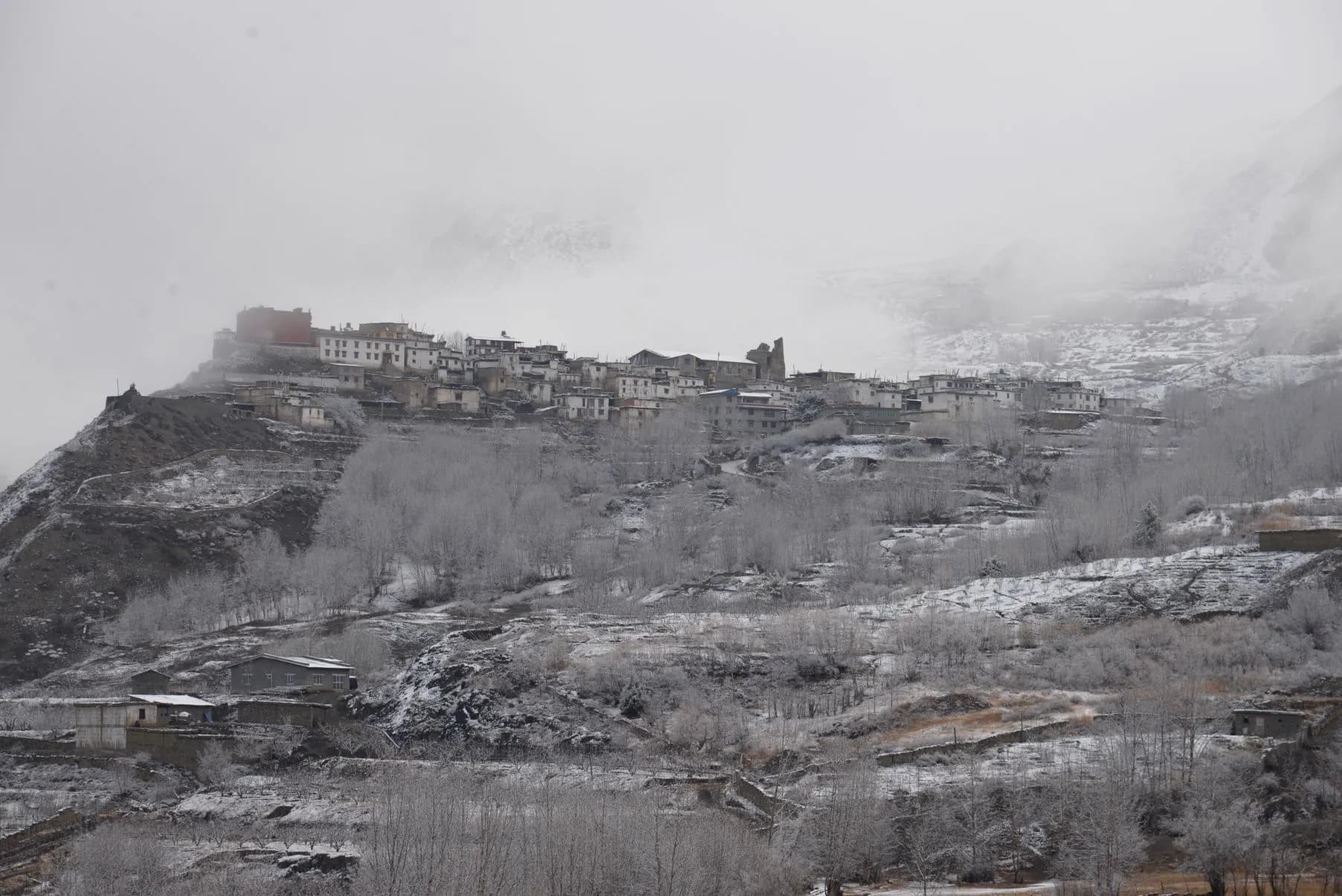
Winter turns the Muktinath valley into a quiet, snow-covered high-altitude wonderland. The mountains look sharper, the skies brighter, and the temple area is nearly empty, giving a meditative experience few travelers ever see.
Nights can drop to -10C and the famous spouts freeze into icicles, while daytime hovers near or just above freezing. The trade-off is difficulty: heavy snow can make the Jomsom-Muktinath road tricky, jeeps may need chains, and Jomsom flights are frequently cancelled for wind or low visibility. Some guesthouses close for the deep winter and heating is limited.
- Bring a heavy down jacket, thermal layers, insulated boots, gloves and a sleeping bag
- Early December is manageable; late December into January is for serious winter travelers only
- February is slightly more stable than January with longer, sunnier days
Quick Month-by-Month Summary
Use this snapshot to fine-tune your dates once you have picked a season.
- January: Coldest month, heavy snow, frequent road closures - solitude seekers only
- February: Still cold but more stable, longer days, better odds of clear weather
- March: Transition month, winter mornings easing into early spring, improving daily
- April: Warm pleasant days, cold crisp nights, roads fully open, flowers blooming
- May: Warmer but dusty and windy, hazy at times, end of the spring window
- June: Monsoon begins mid-month, hills greening, tourism drops
- July: Full monsoon but moderate at Muktinath, green valleys, lower-road landslide risk
- August: Wettest month for the region, most frequent road closures, greenest landscape
- September: Monsoon ends mid-month, skies clearing, autumn feel returning
- October: Peak season, perfect weather, crystal-clear views, book early
- November: Excellent and slightly less crowded, coldest mornings, clearest views of the year
- December: Winter setting in fast, early December workable, late December harsh
Frequently Asked Questions
What is the overall best time to visit Muktinath?
October and November are the best months. After the monsoon, the air is dust-free, the skies are stable and clear, and the Annapurna and Dhaulagiri ranges are at their most visible. March and April are the next-best window with milder weather and fewer crowds.
Which months have the clearest mountain views?
November offers the clearest views of the year, closely followed by October and early December. The post-monsoon atmosphere is crisp and dust-free. Late February through March also clears up well after winter storms pass.
Can I visit Muktinath during the monsoon?
Yes. Muktinath sits in a rain shadow and gets much less rain than southern Nepal, and the landscape turns lush and green with very few tourists around. The main risk is the lower road sections between Beni and Ghasa, which can close briefly due to landslides, so keep a few buffer days in your plan.
Is Muktinath Temple open in winter?
Yes, the temple stays open year-round, including winter. However, December to February brings extreme cold, possible snowfall, less reliable Jomsom flights and occasional road closures, so winter visits need warm gear and flexible plans.
Do flights to Jomsom run all year?
Flights to Jomsom operate throughout the year, but reliability varies a lot with the weather. Wind, fog and low visibility can cause delays or cancellations, especially in winter and during the monsoon mornings, so always keep spare time around flight days.